We use essential cookies to keep the site working and remember your preferences. Privacy Policy

VERA
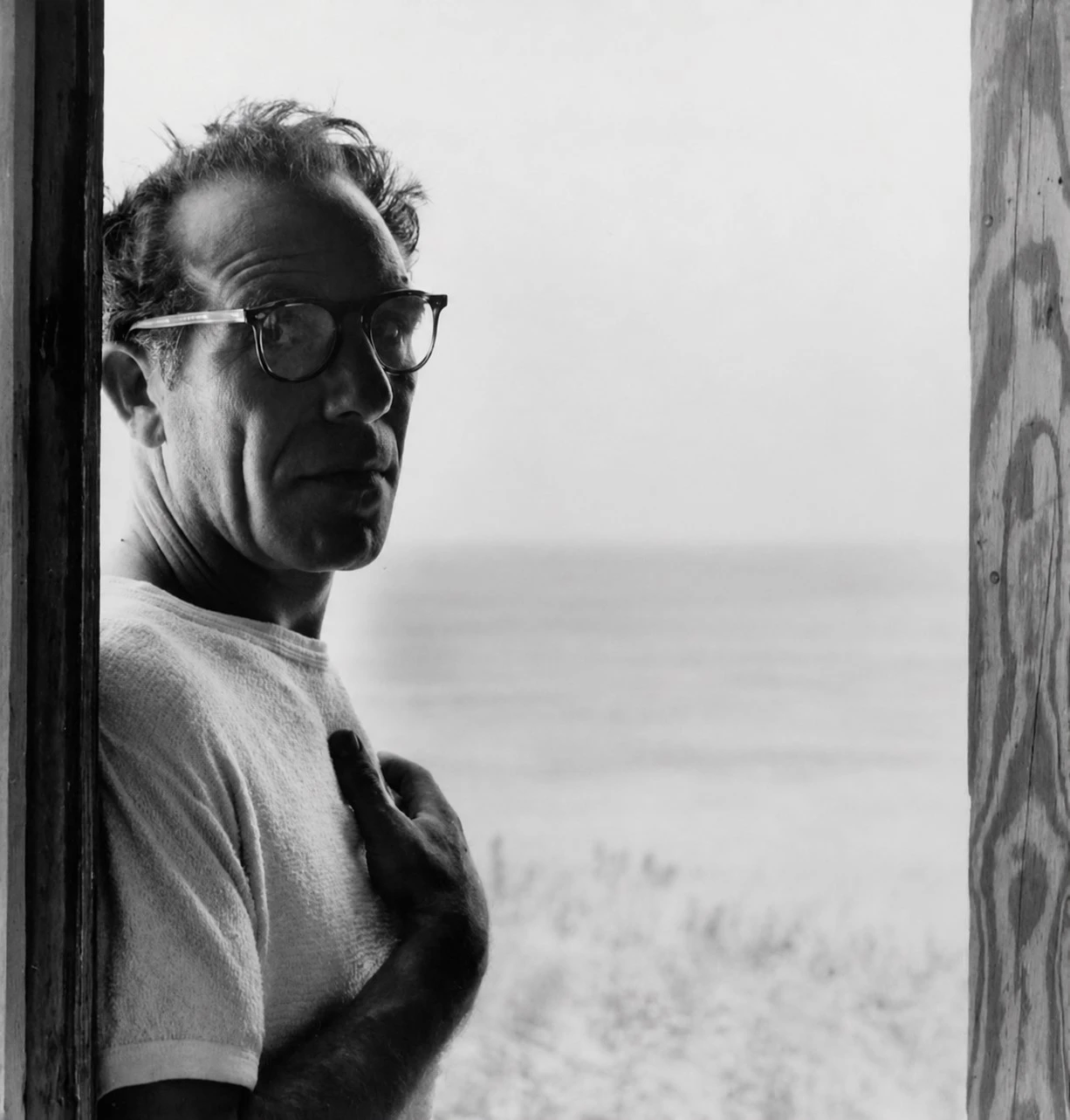
Portrait of Boris Margo, 1952. Photo by Arnold Newman
Photograph by Arnold Newman, 1952

Boris Margo was a Ukrainian-American painter, printmaker, sculptor, and technical innovator whose singular career occupies an important place within American Surrealism and postwar modernism. Bridging the Ukrainian and Eastern European avant-garde, Surrealism, and the milieu from which the New York School emerged, Margo developed a visionary language of biomorphic forms, atmospheric spaces, and subconscious imagery while pioneering cellocut, one of the most distinctive experimental printmaking processes of the twentieth century.

Born in 1902 in Volochysk, in present-day Ukraine, Margo received his formative artistic education in Odesa, studying at the Polytechnic College of Art, later the Grekov Odesa Art School. In 1924, supported by a grant, he continued his training in Moscow at Futemas (Workshop for the Art of the Future), and in 1927 studied under the radical avant-garde artist Pavel Filonov at his Analytical School of Art in Leningrad. His artistic formation was therefore rooted directly in the experimental culture of the Eastern European avant-garde of the 1920s.

In 1928, Margo received permission to continue his studies abroad and travelled to North America. After spending a year working as a muralist in Montreal, he settled in New York in 1930 and became an American citizen in 1943. New York would become the central laboratory of his mature practice. Margo worked as an assistant to Arshile Gorky and became part of a remarkable circle of artists that included Mark Rothko, with whom he shared an apartment during the 1940s. This proximity placed him within the milieu from which the New York School and American Abstract Expressionism would emerge, even as his own artistic path remained fiercely independent.

In America, Margo’s engagement with Surrealism deepened. He experimented with automatism, collage, decalcomania, chance procedures, and unconventional materials, treating the artistic process itself as a means of accessing the subconscious. His imagery gradually evolved from Surrealist figuration toward mysterious biomorphic worlds populated by organic structures, celestial bodies, and enigmatic architectural forms. By the late 1940s, he had developed a mature semi-abstract language; during the 1950s, this vocabulary moved increasingly toward luminous, calligraphic abstraction.

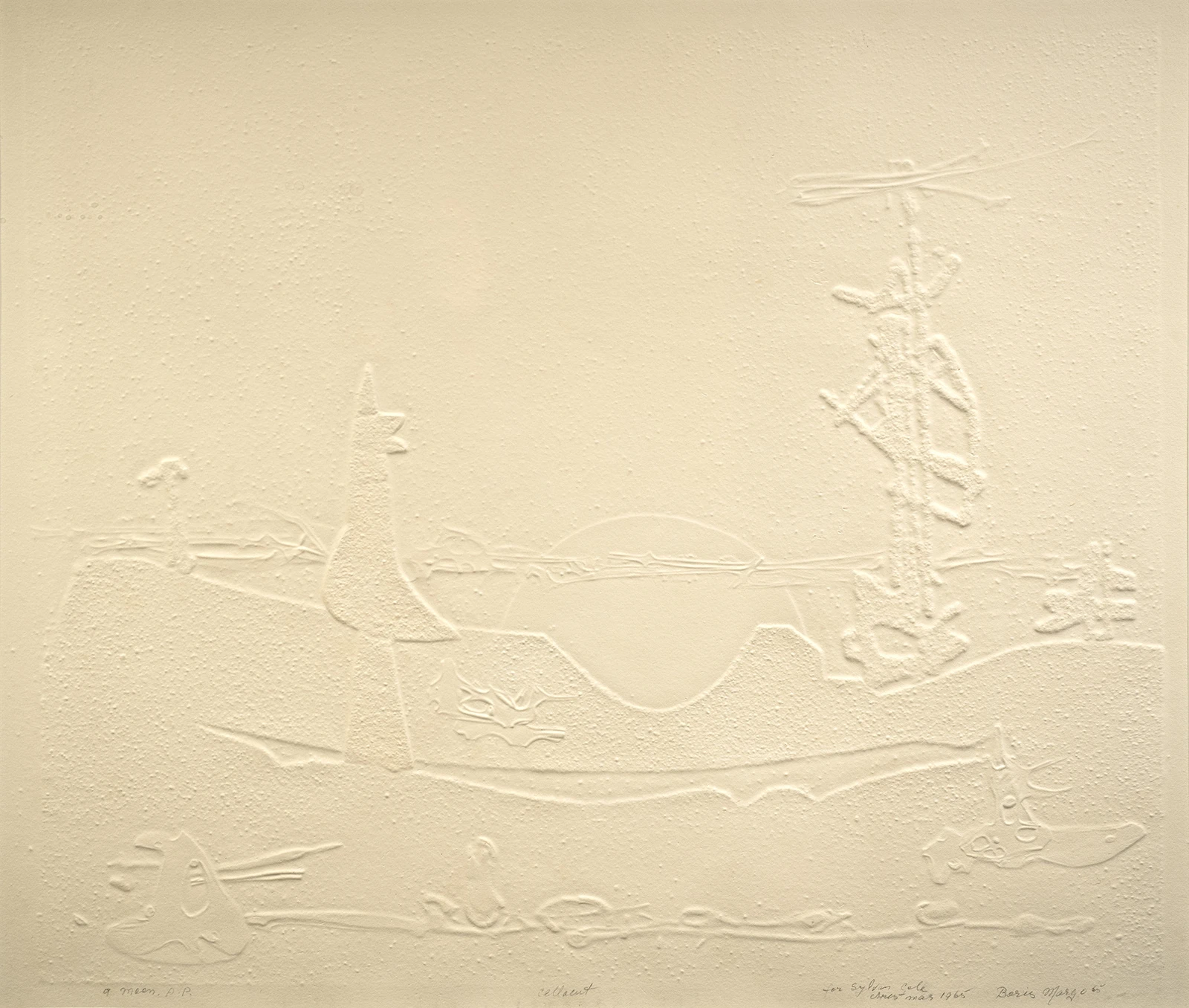
Margo’s most important technical contribution was the development of cellocut, an experimental printmaking process that he began exploring in the early 1930s. By dissolving celluloid in acetone and applying the resulting plastic substance to a rigid support, Margo could build, incise, texture, and transform the printing surface before using it as a matrix. Cellocut brought together the painterly spontaneity of monotype, the structural possibilities of engraving, and the physical dimensionality of a new synthetic material. By 1943, The Metropolitan Museum of Art had acquired his Floating Objects Illumined No. 1 through the Harris Brisbane Dick Fund; today The Met holds a substantial group of Margo’s cellocuts from different periods of his career.

Institutional recognition came early. Margo’s first solo exhibition took place at Artists Gallery in New York in 1939. In 1943, his work was included in a collage exhibition at Peggy Guggenheim’s Art of This Century, and in 1944 he was included in Sidney Janis’s influential project Abstract and Surrealist Art in America, one of the defining documents of American abstraction and Surrealism in the mid-1940s.

A decisive stage in Margo’s career began in 1947, when he joined Betty Parsons Gallery, one of the defining galleries of postwar American modernism. Parsons presented four solo exhibitions of his work—in 1947, 1950, 1953, and 1955—and the gallery represented him until 1962. During these years, Margo’s biomorphic Surrealism increasingly gave way to complex atmospheric and calligraphic abstractions that established the mature visual language for which he became known.

Margo’s institutional presence is particularly substantial at the Whitney Museum of American Art. The museum first acquired his work in 1948 and today holds 85 works by the artist, while Whitney records connect Margo to 18 exhibitions. The collection spans paintings, cellocuts, and experimental works on paper across several decades; among its key works is the large-scale From the Other Side of the Bridge (1945–1947), acquired following its appearance in the museum’s Annual Exhibition of Contemporary American Painting.

Margo also participated in five exhibitions at The Museum of Modern Art (MoMA), which today identifies him as “American, born Ukraine.” His work is represented in major museum collections including The Metropolitan Museum of Art, Whitney Museum of American Art, Smithsonian American Art Museum, National Gallery of Art, Art Institute of Chicago, Brooklyn Museum, Los Angeles County Museum of Art, Yale University Art Gallery, Moderna Museet in Stockholm, and numerous other institutions in the United States and Europe.

Alongside his studio practice, Margo became an influential educator, teaching or serving as a visiting artist at institutions including American University, the University of Michigan, the School of the Art Institute of Chicago, the University of Illinois, Syracuse University, and Ohio State University. His first major traveling retrospective was organized by the Tweed Gallery at the University of Minnesota, Duluth, in 1962. In 1988, Margo received a Pollock-Krasner Foundation grant, while the Provincetown Art Association and Museum organized what was then the largest retrospective of his career.

Posthumous reassessment has continued to expand his place within twentieth-century art history. In 2019, Syracuse University presented Boris Margo: The Cellocut and Use of Plastics; in 2021, his work appeared in the historical survey Surrealism in American Art in Marseille; and in 2022–2023, the Cape Cod Museum of Art organized the dedicated exhibition Boris Margo: A Ukrainian Sensibility, foregrounding the Ukrainian origins of an artist long embedded in the history of American modernism.

Today, Boris Margo stands as a distinctive figure in the history of American modernism: an artist formed by the Ukrainian and European avant-garde, immersed in New York Surrealism and the milieu from which Abstract Expressionism emerged, yet ultimately defined by an independent imagination and an extraordinary commitment to material and technical invention. From the haunting Surrealist worlds of the 1930s and 1940s to the cosmic, biomorphic, and luminous abstractions of his mature period, Margo consistently explored the threshold between matter and imagination, the physical and the subconscious. His substantial presence in the Whitney, The Met, and other leading museum collections secures his place among the most original experimental voices of mid-twentieth-century American art.
About the artist

Boris Margo

1902-1995, Ukraine / USA

Boris Margo was a Ukrainian-American painter, printmaker, sculptor, and technical innovator whose singular career occupies an important place within American Surrealism and postwar modernism. Bridging the Ukrainian and Eastern European avant-garde, Surrealism, and the milieu from which the New York School emerged, Margo developed a visionary language of biomorphic forms, atmospheric spaces, and subconscious imagery while pioneering cellocut, one of the most distinctive experimental printmaking processes of the twentieth century.

Born in 1902 in Volochysk, in present-day Ukraine, Margo received his formative artistic education in Odesa, studying at the Polytechnic College of Art, later the Grekov Odesa Art School. In 1924, supported by a grant, he continued his training in Moscow at Futemas (Workshop for the Art of the Future), and in 1927 studied under the radical avant-garde artist Pavel Filonov at his Analytical School of Art in Leningrad. His artistic formation was therefore rooted directly in the experimental culture of the Eastern European avant-garde of the 1920s.

In 1928, Margo received permission to continue his studies abroad and travelled to North America. After spending a year working as a muralist in Montreal, he settled in New York in 1930 and became an American citizen in 1943. New York would become the central laboratory of his mature practice. Margo worked as an assistant to Arshile Gorky and became part of a remarkable circle of artists that included Mark Rothko, with whom he shared an apartment during the 1940s. This proximity placed him within the milieu from which the New York School and American Abstract Expressionism would emerge, even as his own artistic path remained fiercely independent.

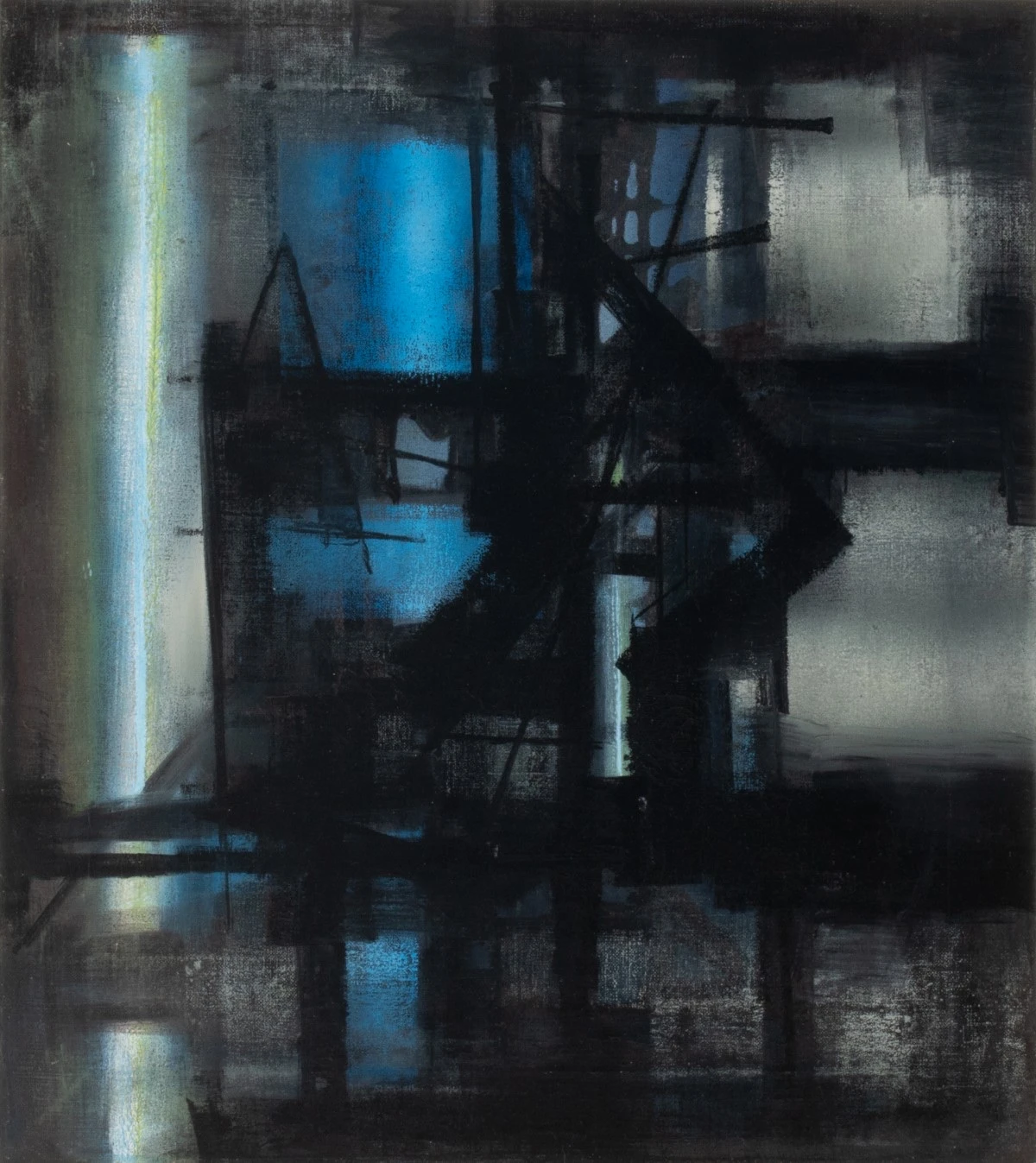
In America, Margo’s engagement with Surrealism deepened. He experimented with automatism, collage, decalcomania, chance procedures, and unconventional materials, treating the artistic process itself as a means of accessing the subconscious. His imagery gradually evolved from Surrealist figuration toward mysterious biomorphic worlds populated by organic structures, celestial bodies, and enigmatic architectural forms. By the late 1940s, he had developed a mature semi-abstract language; during the 1950s, this vocabulary moved increasingly toward luminous, calligraphic abstraction.

Margo’s most important technical contribution was the development of cellocut, an experimental printmaking process that he began exploring in the early 1930s. By dissolving celluloid in acetone and applying the resulting plastic substance to a rigid support, Margo could build, incise, texture, and transform the printing surface before using it as a matrix. Cellocut brought together the painterly spontaneity of monotype, the structural possibilities of engraving, and the physical dimensionality of a new synthetic material. By 1943, The Metropolitan Museum of Art had acquired his Floating Objects Illumined No. 1 through the Harris Brisbane Dick Fund; today The Met holds a substantial group of Margo’s cellocuts from different periods of his career.

Institutional recognition came early. Margo’s first solo exhibition took place at Artists Gallery in New York in 1939. In 1943, his work was included in a collage exhibition at Peggy Guggenheim’s Art of This Century, and in 1944 he was included in Sidney Janis’s influential project Abstract and Surrealist Art in America, one of the defining documents of American abstraction and Surrealism in the mid-1940s.

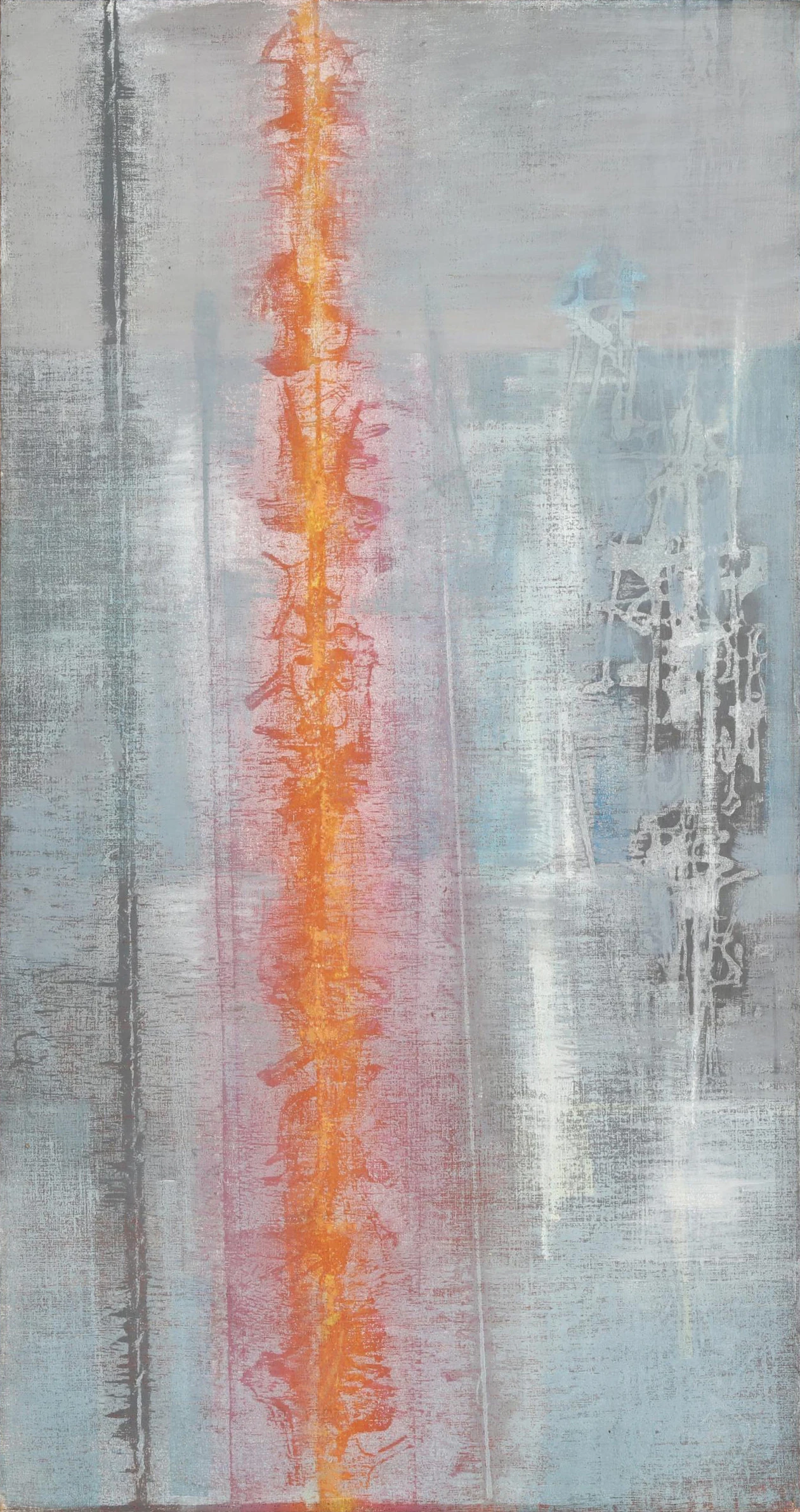
A decisive stage in Margo’s career began in 1947, when he joined Betty Parsons Gallery, one of the defining galleries of postwar American modernism. Parsons presented four solo exhibitions of his work—in 1947, 1950, 1953, and 1955—and the gallery represented him until 1962. During these years, Margo’s biomorphic Surrealism increasingly gave way to complex atmospheric and calligraphic abstractions that established the mature visual language for which he became known.

Margo’s institutional presence is particularly substantial at the Whitney Museum of American Art. The museum first acquired his work in 1948 and today holds 85 works by the artist, while Whitney records connect Margo to 18 exhibitions. The collection spans paintings, cellocuts, and experimental works on paper across several decades; among its key works is the large-scale From the Other Side of the Bridge (1945–1947), acquired following its appearance in the museum’s Annual Exhibition of Contemporary American Painting.

Margo also participated in five exhibitions at The Museum of Modern Art (MoMA), which today identifies him as “American, born Ukraine.” His work is represented in major museum collections including The Metropolitan Museum of Art, Whitney Museum of American Art, Smithsonian American Art Museum, National Gallery of Art, Art Institute of Chicago, Brooklyn Museum, Los Angeles County Museum of Art, Yale University Art Gallery, Moderna Museet in Stockholm, and numerous other institutions in the United States and Europe.

Alongside his studio practice, Margo became an influential educator, teaching or serving as a visiting artist at institutions including American University, the University of Michigan, the School of the Art Institute of Chicago, the University of Illinois, Syracuse University, and Ohio State University. His first major traveling retrospective was organized by the Tweed Gallery at the University of Minnesota, Duluth, in 1962. In 1988, Margo received a Pollock-Krasner Foundation grant, while the Provincetown Art Association and Museum organized what was then the largest retrospective of his career.

Posthumous reassessment has continued to expand his place within twentieth-century art history. In 2019, Syracuse University presented Boris Margo: The Cellocut and Use of Plastics; in 2021, his work appeared in the historical survey Surrealism in American Art in Marseille; and in 2022–2023, the Cape Cod Museum of Art organized the dedicated exhibition Boris Margo: A Ukrainian Sensibility, foregrounding the Ukrainian origins of an artist long embedded in the history of American modernism.

Today, Boris Margo stands as a distinctive figure in the history of American modernism: an artist formed by the Ukrainian and European avant-garde, immersed in New York Surrealism and the milieu from which Abstract Expressionism emerged, yet ultimately defined by an independent imagination and an extraordinary commitment to material and technical invention. From the haunting Surrealist worlds of the 1930s and 1940s to the cosmic, biomorphic, and luminous abstractions of his mature period, Margo consistently explored the threshold between matter and imagination, the physical and the subconscious. His substantial presence in the Whitney, The Met, and other leading museum collections secures his place among the most original experimental voices of mid-twentieth-century American art.

Selected Artworks

3
A Moon, embossed cellocut on paper, 1965
Boris Margo

A Moon

1965

45.1 × 53.3 cm

Embossed cellocut on paper

Untitled, oil on canvas, 1954
Boris Margo

Untitled

1954

40.6 × 45.7 cm

Oil on canvas

From An August, oil on canvas, 1940s–1950s
Boris Margo

From An August

1940s–1950s

45.7 × 86.4 cm

Oil on canvas

Join our mailing list for updates about our artists, exhibitions, events, and more.

  • Artists
  • Art Fairs
  • Collecting
  • About
  • Contacts
  • Newsletter
  • Privacy Policy
  • Terms of Use

© VERA 2026