From An August
1940s–1950s
Oil on canvas
About the work
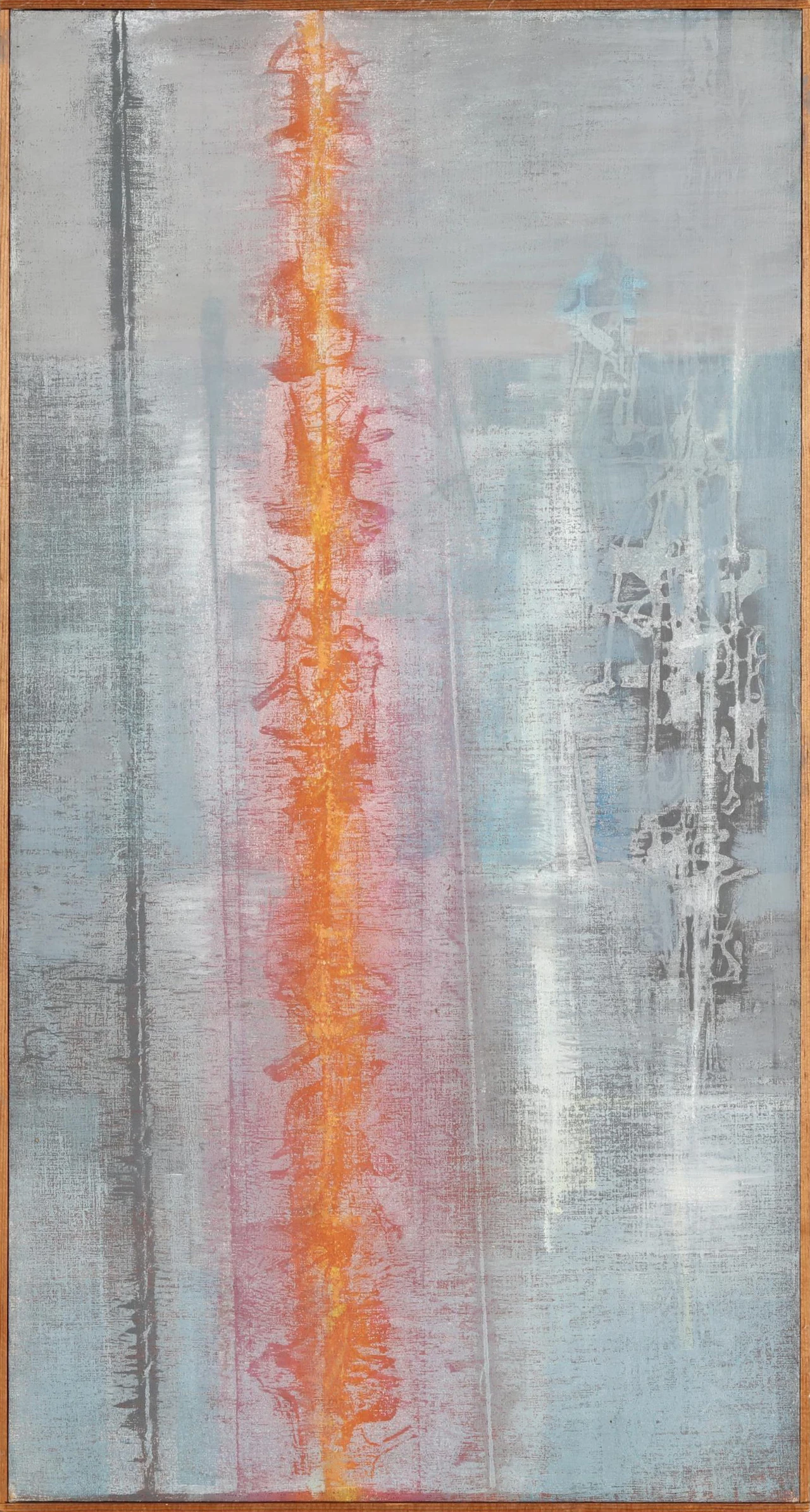
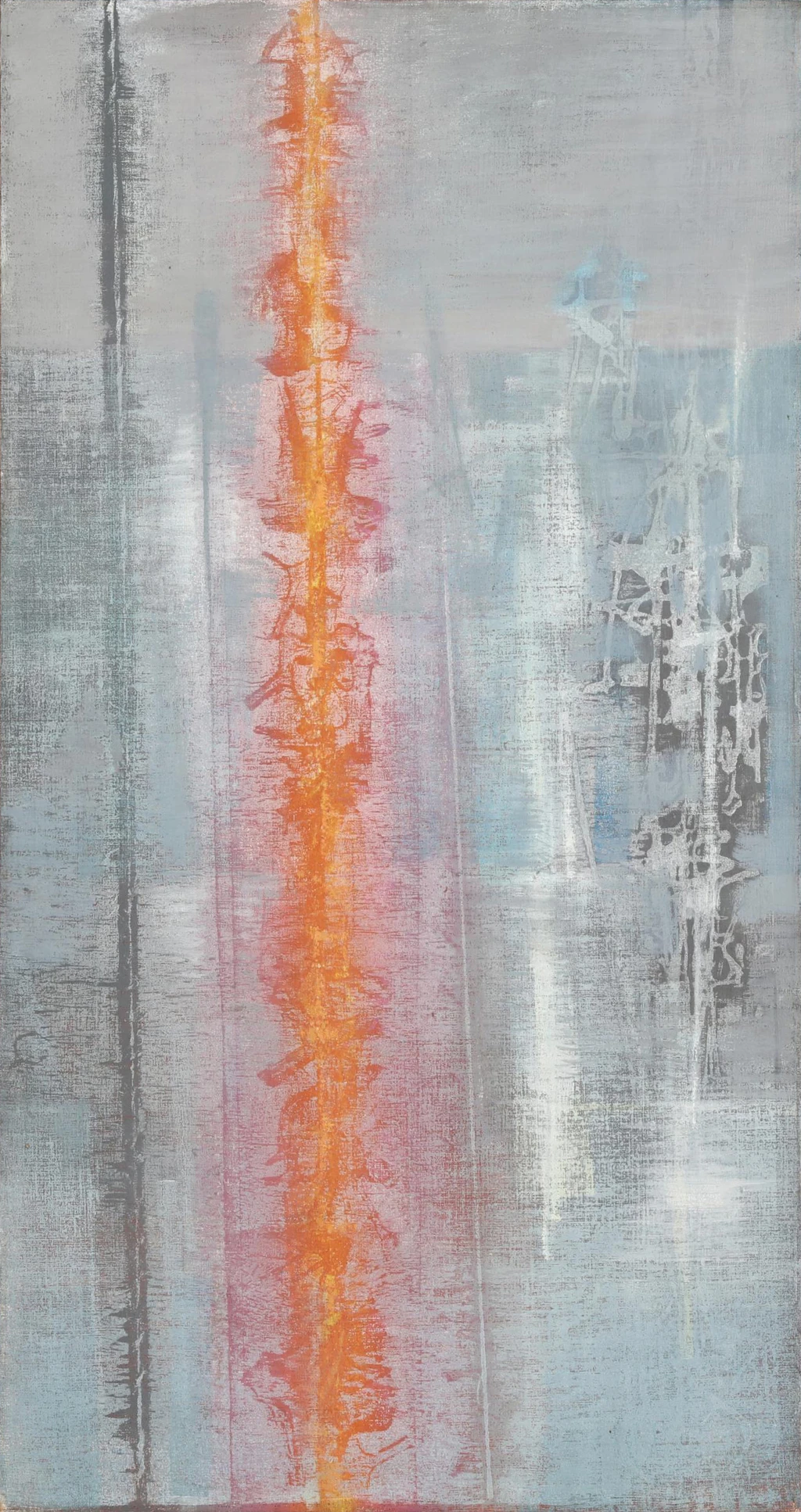
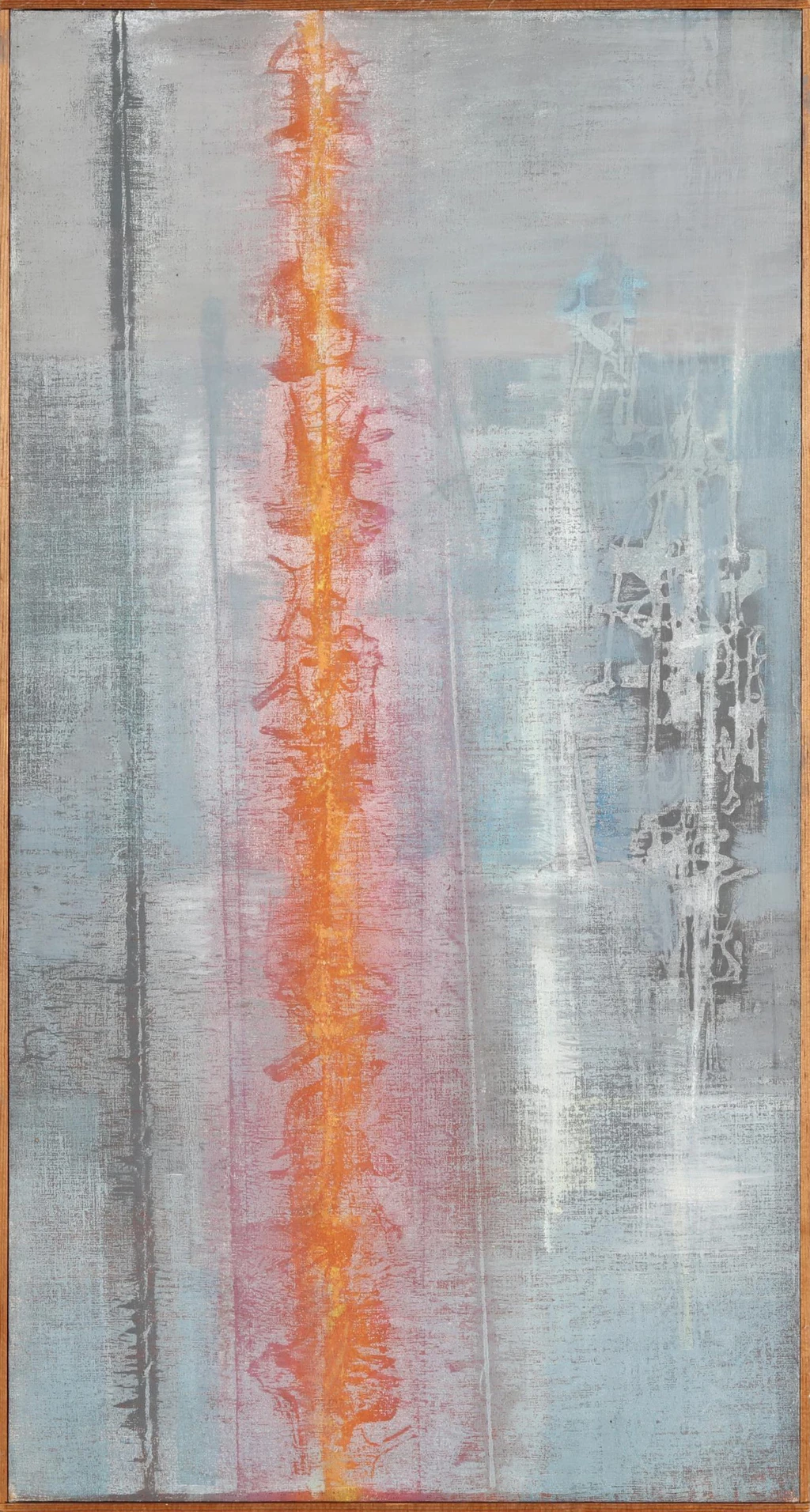
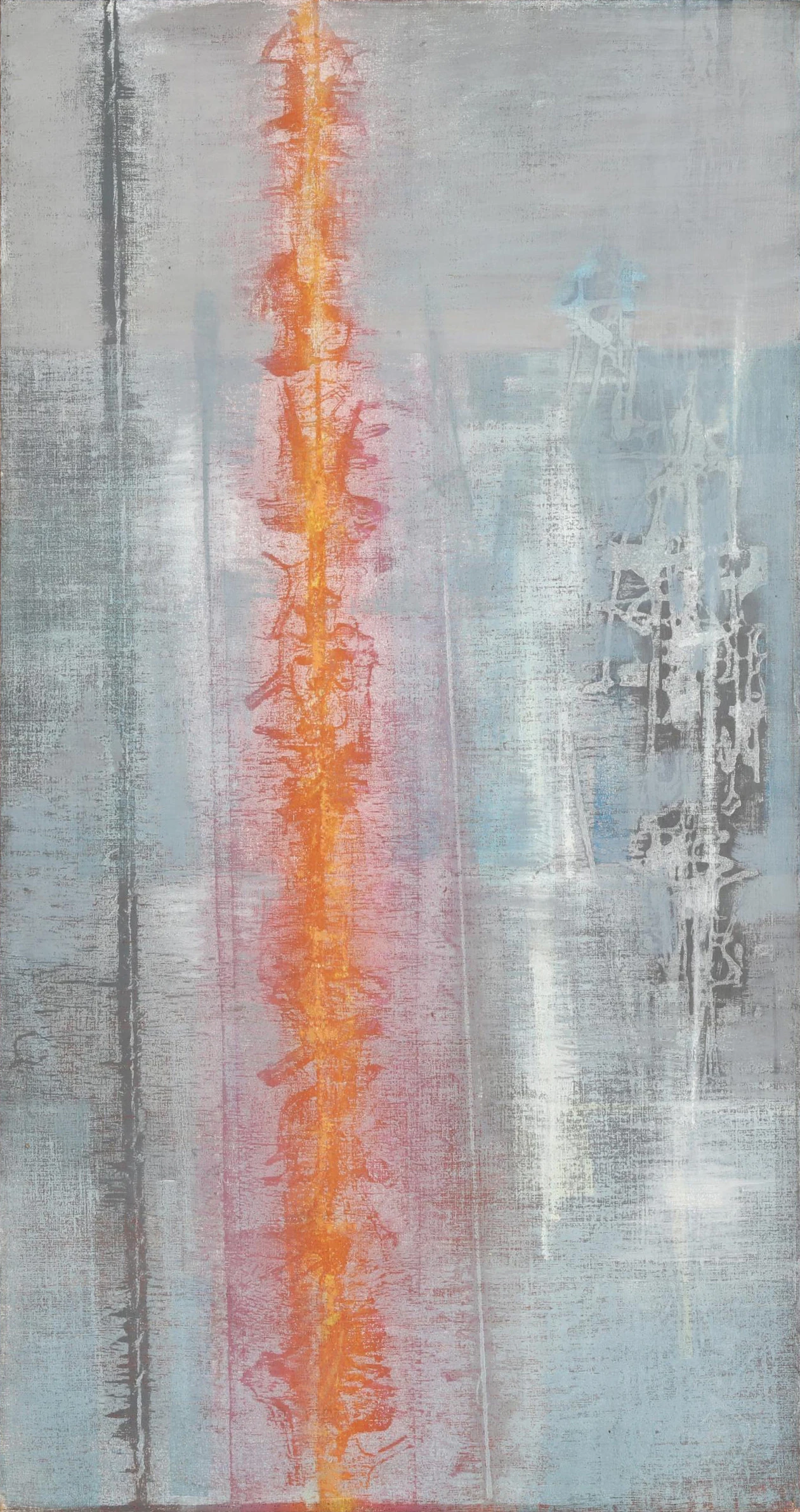
In From An August, Boris Margo transforms an impression of nature into an autonomous pictorial reality. A saturated orange-red vertical cuts through a silvery blue field, while delicate, nearly translucent structures emerge around it, suspended between organic form, sign, and trace of light. The specific landscape disappears; what remains is an experience of time, atmosphere, and transformation.
This understanding of the image had been fundamental to Margo’s work long before his mature abstraction. In 1934, the artist wrote that the art of his time must embody “new content” as well as “new form and new technique,” allowing the artist to express the agony, joy, and hope of the age through images without literal or logical meaning. The statement survives on the introductory sheet to his Portfolio No. 1, now in the collection of the Amon Carter Museum of American Art.
The title From An August belongs to a recurring constellation of works in which Margo approached time not simply as chronology, but as an experienced state. Titles such as August 10, 1949, From August, July 21, From November Nights, and Trajectory of Dawn repeatedly turn moments, months, and transitions of light into points of departure for abstraction. August 10, 1949, now in the National Gallery of Art, demonstrates that August had entered Margo’s visual vocabulary by the end of the 1940s.
Particularly significant is Margo’s related painting From August, reproduced and discussed by Laurence Schmeckebier in Boris Margo: Graphic Work, 1932–1968. Schmeckebier described the transformation taking place in Margo’s work as a movement toward “a luminous dark-against-light pattern” — a point at which earlier, more sharply articulated forms begin to dissolve into an image structured increasingly by light itself.
In From An August, August is therefore not illustrated as a season. It becomes an initiating sensation: warmth, radiance, and the gradual transformation of an atmosphere. The central vertical may suggest a flare, organic growth, or a trace of energy, yet none of these readings becomes definitive. Its source remains uncertain; light appears to arise from within the pictorial field itself. An experience of the visible world is transformed into an image whose meaning can no longer be reduced to what was originally observed.
This openness is central to Margo’s mature work. Nature and material reality increasingly become points of departure for images poised between the visible and the inward, the physical and the barely knowable. From An August thus belongs to a crucial development in his art: the movement from the biomorphic and Surrealist imagery of the 1930s and 1940s toward the more atmospheric, light-based abstraction of the postwar period.
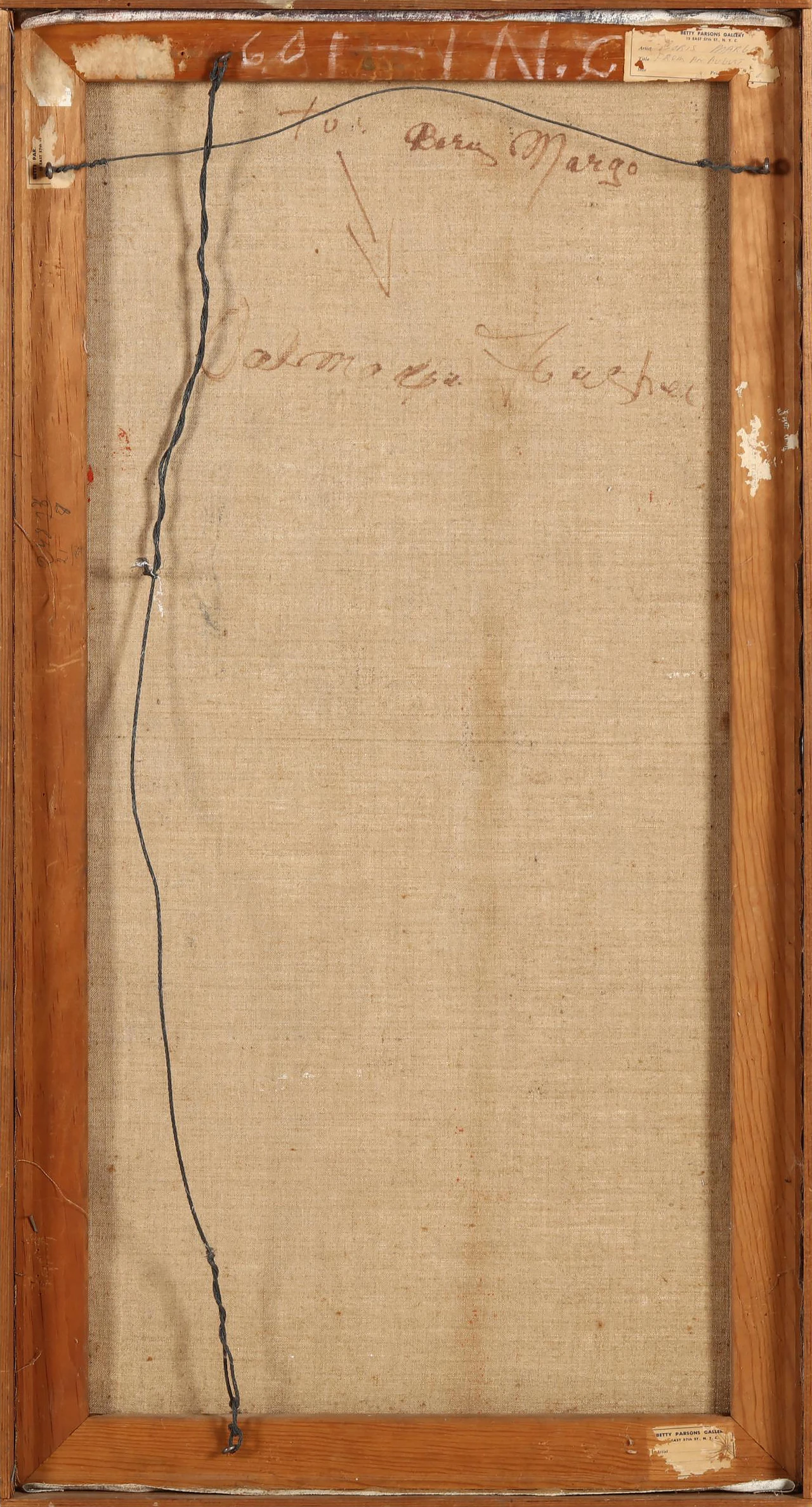
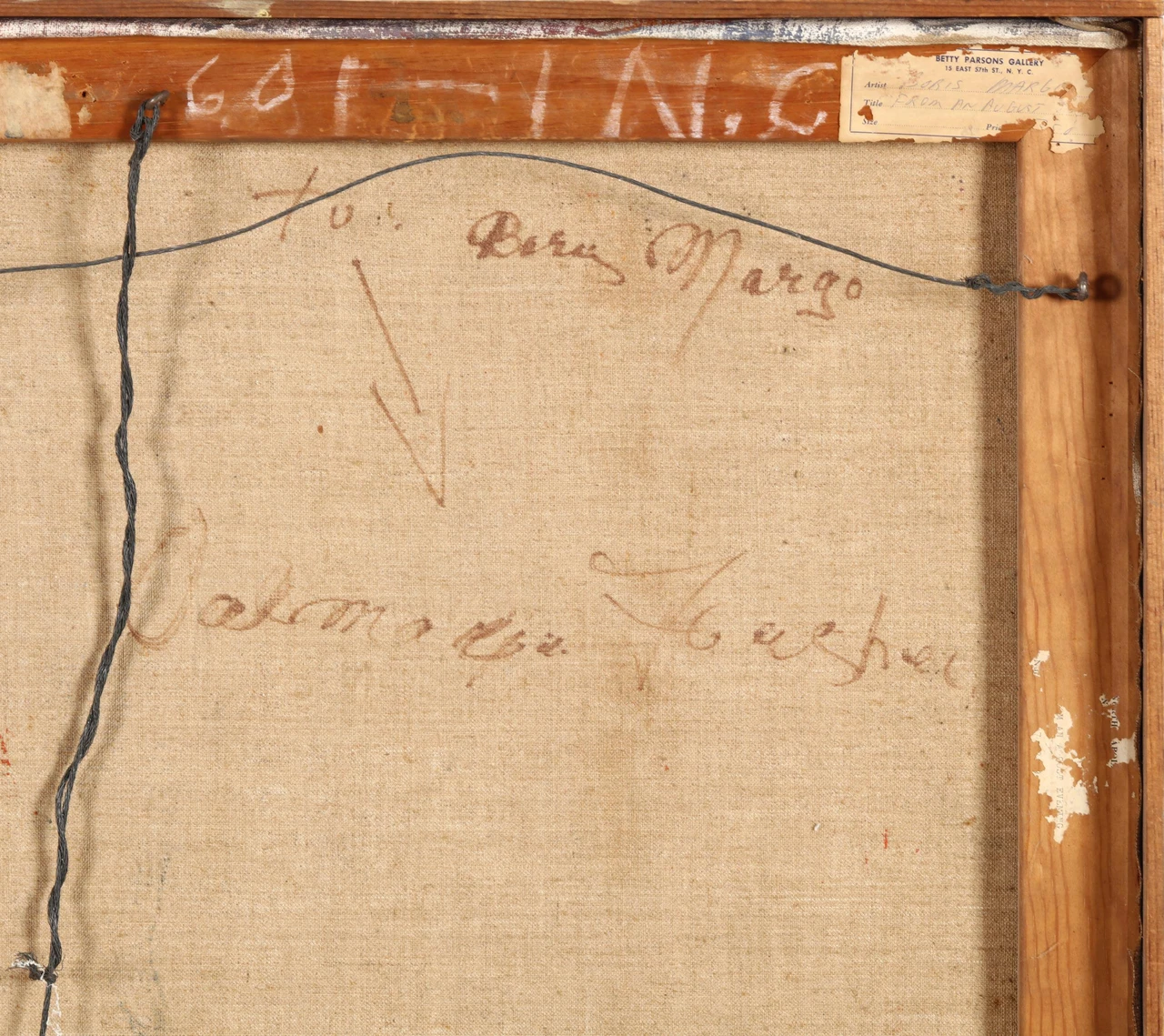
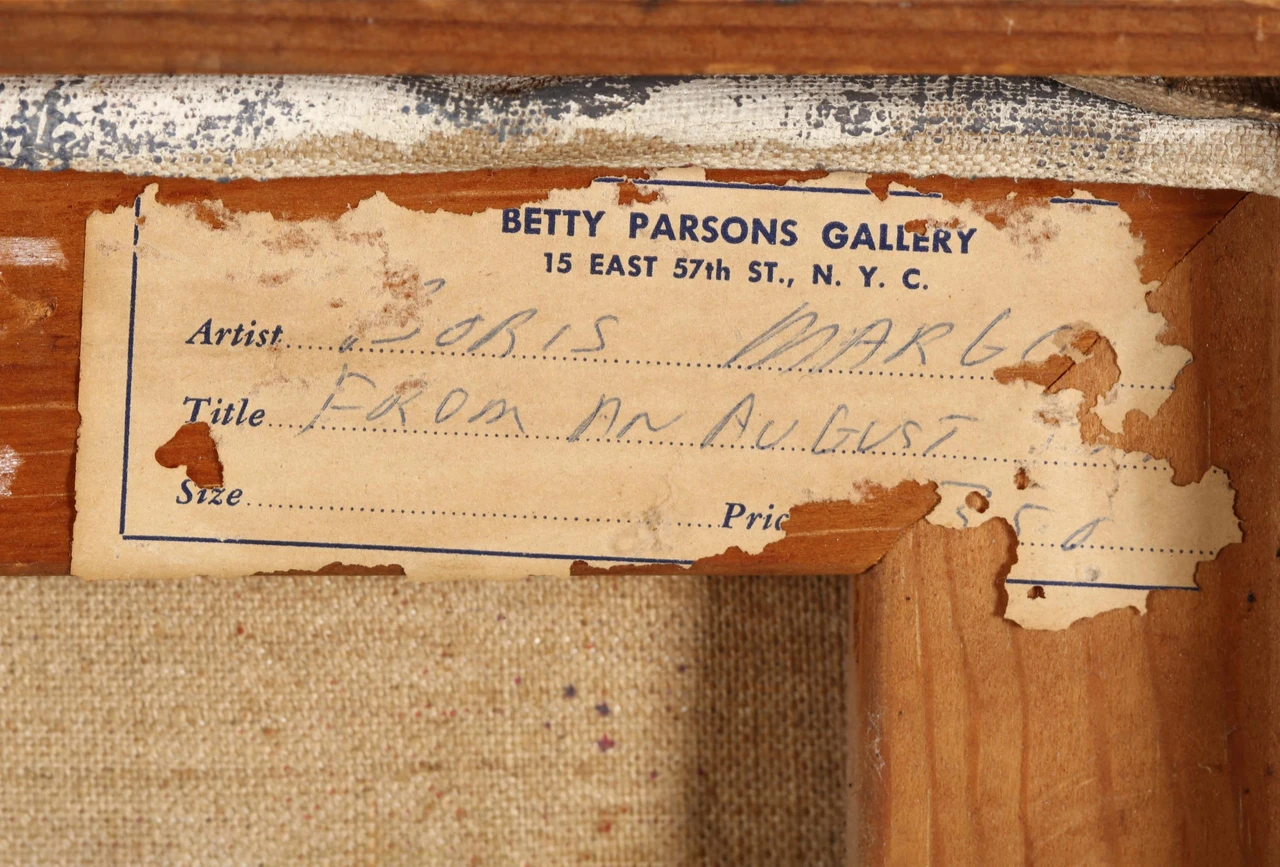
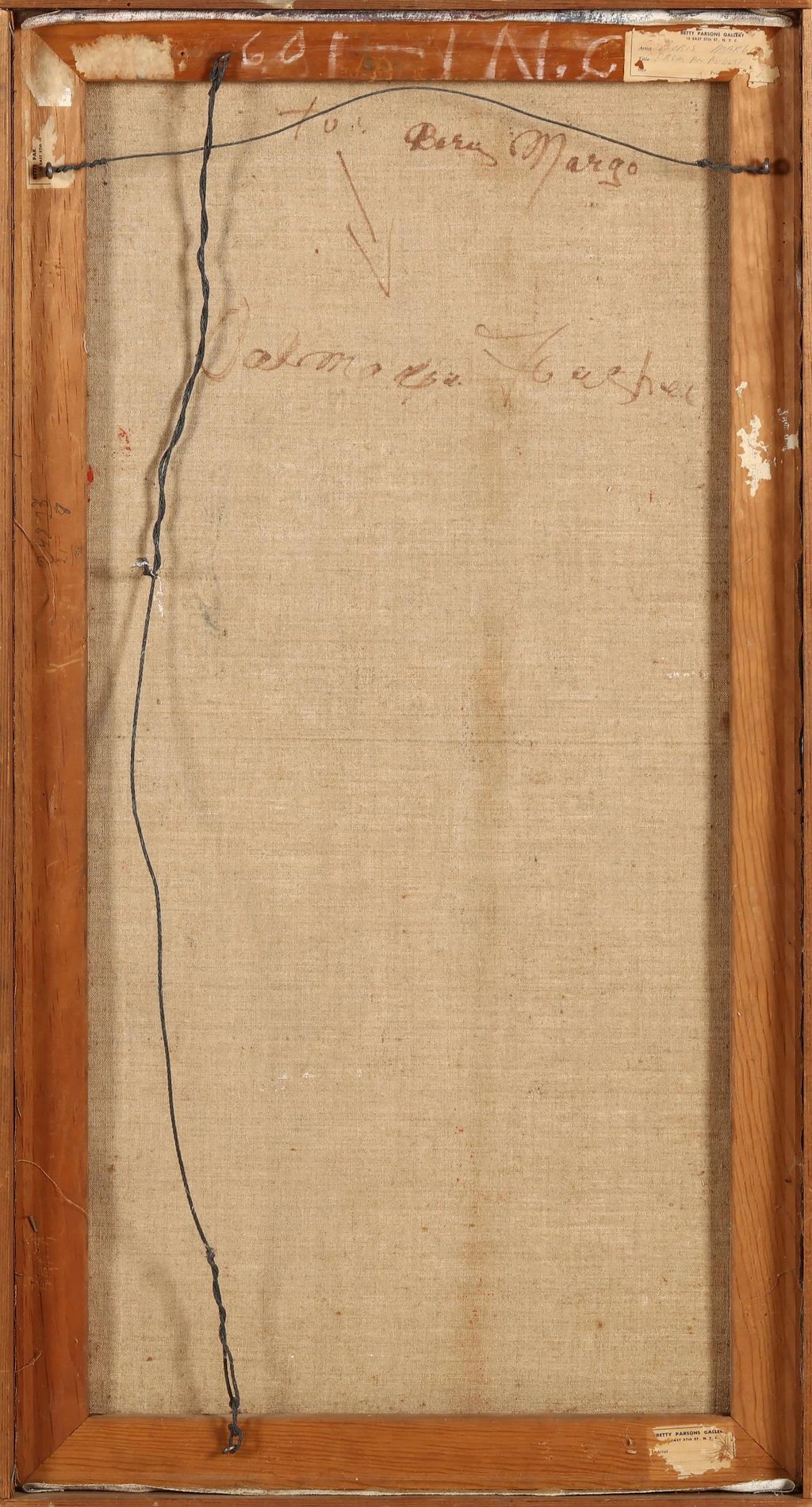
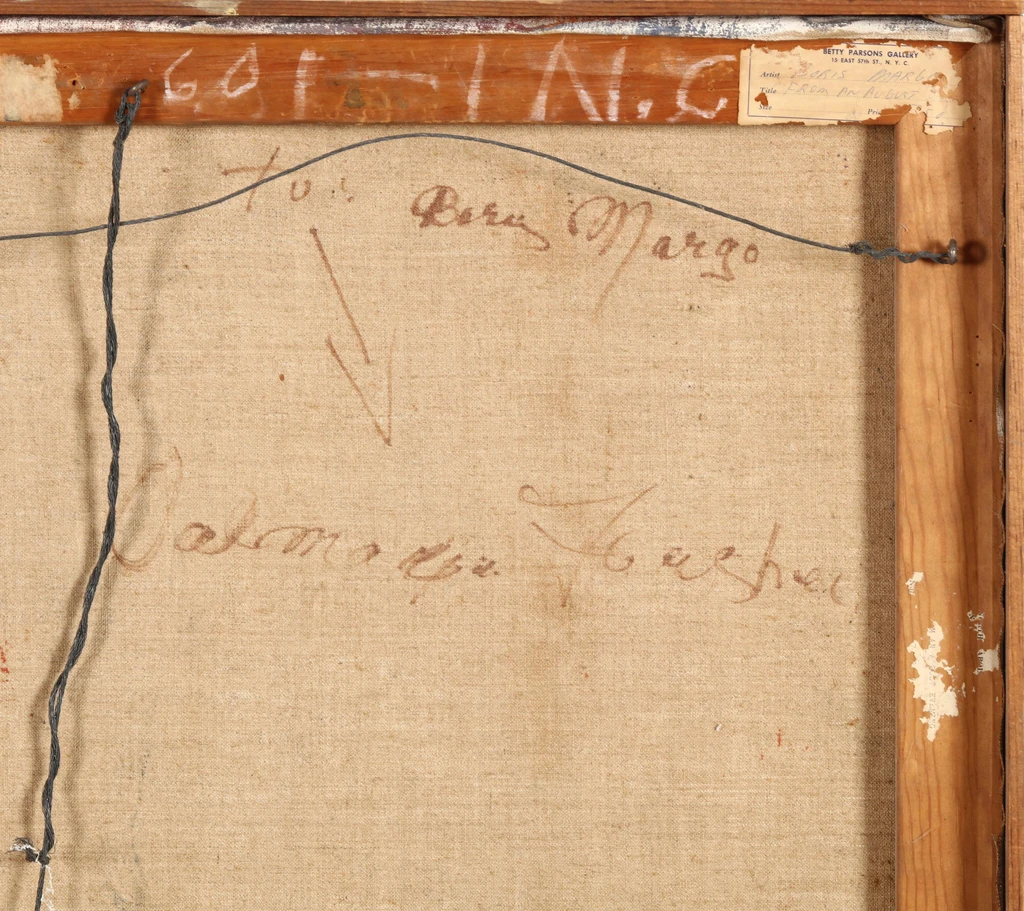
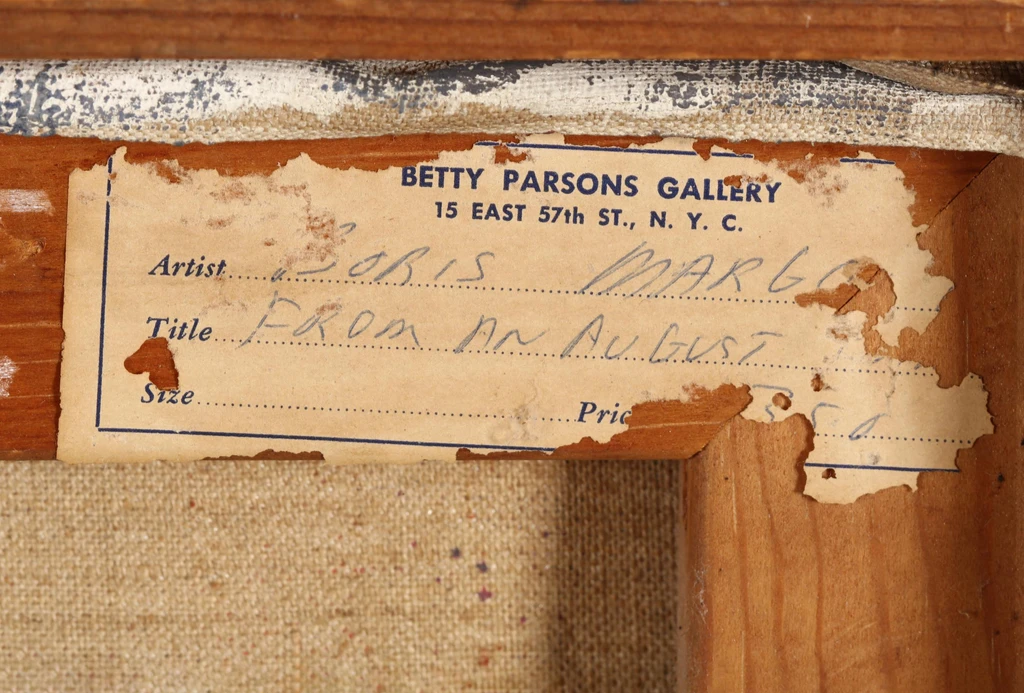
The reverse of the painting retains the signature Boris Margo, the title From An August, and an original Betty Parsons Gallery label, 15 East 57th Street, New York. This connection places the work within one of the central environments of postwar New York art. In 1947, Margo was included in The Ideographic Picture, organized by Barnett Newman at Betty Parsons Gallery and featuring Newman, Mark Rothko, Ad Reinhardt, Clyfford Still, Theodoros Stamos, and Pietro Lazzari. The painting later belonged to Ola Maie Foushee (1905–1999) of Chapel Hill, North Carolina — an artist, writer, and arts advocate.