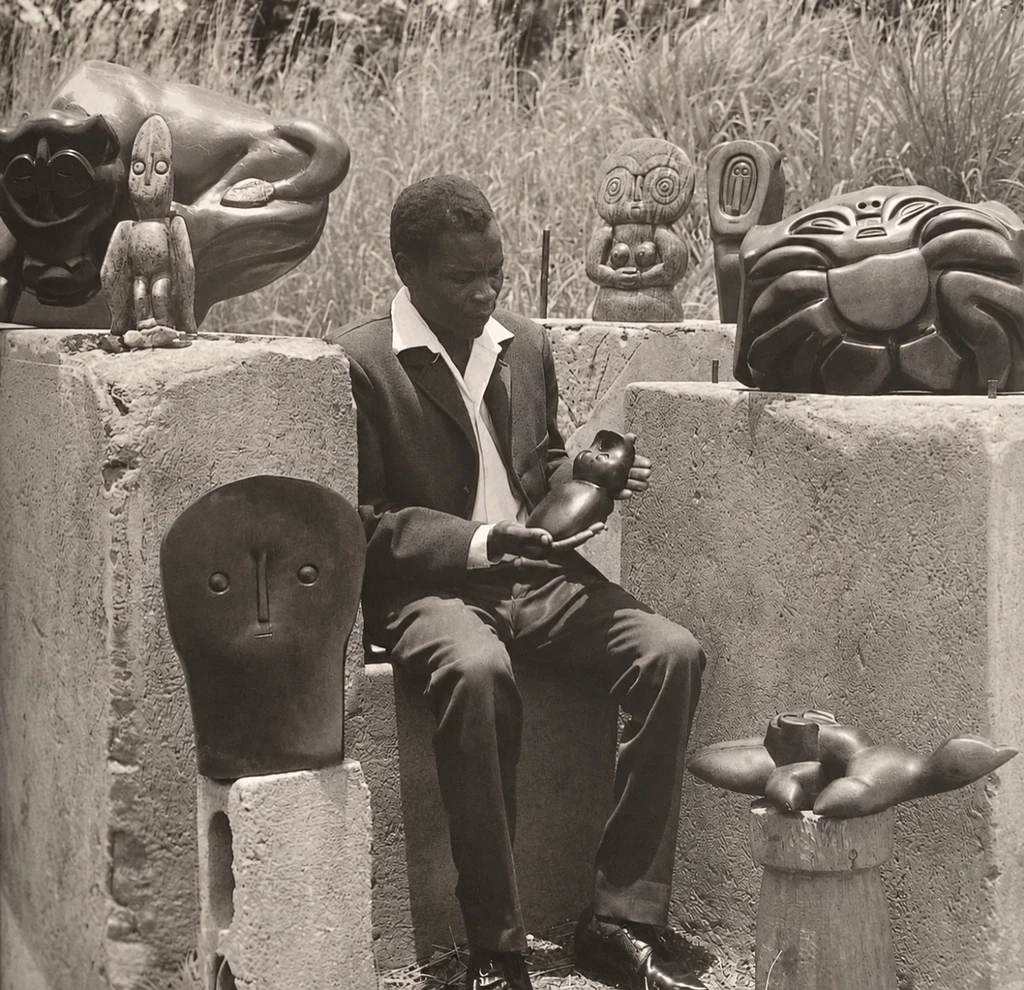
Henry Munyaradzi
1931-1998, Zimbabwe
Henry Munyaradzi was one of Zimbabwe’s most celebrated sculptors, a major figure in late twentieth-century African modernism, and one of the leading artists of the first generation of Zimbabwean stone sculpture, the internationally renowned movement widely known as Shona sculpture. Within the international art world he was often known simply as “Henry”—a reflection of the extraordinary recognizability of a sculptural language defined by radical purity of form, geometric clarity, and an exceptional sensitivity to stone.
With no formal academic training in art, Munyaradzi came to sculpture after working as a blacksmith, carpenter, and tobacco grader. In 1967 he joined the pioneering Tengenenge artists’ community, one of the central environments in which modern Zimbabwean stone sculpture emerged. Almost immediately, he developed an independent and remarkably coherent visual language that distinguished his work from that of his contemporaries. The Metropolitan Museum of Art situates his practice within the important history of independence-era African modernism and dates the beginning of his artistic career at Tengenenge to around 1967–1968.
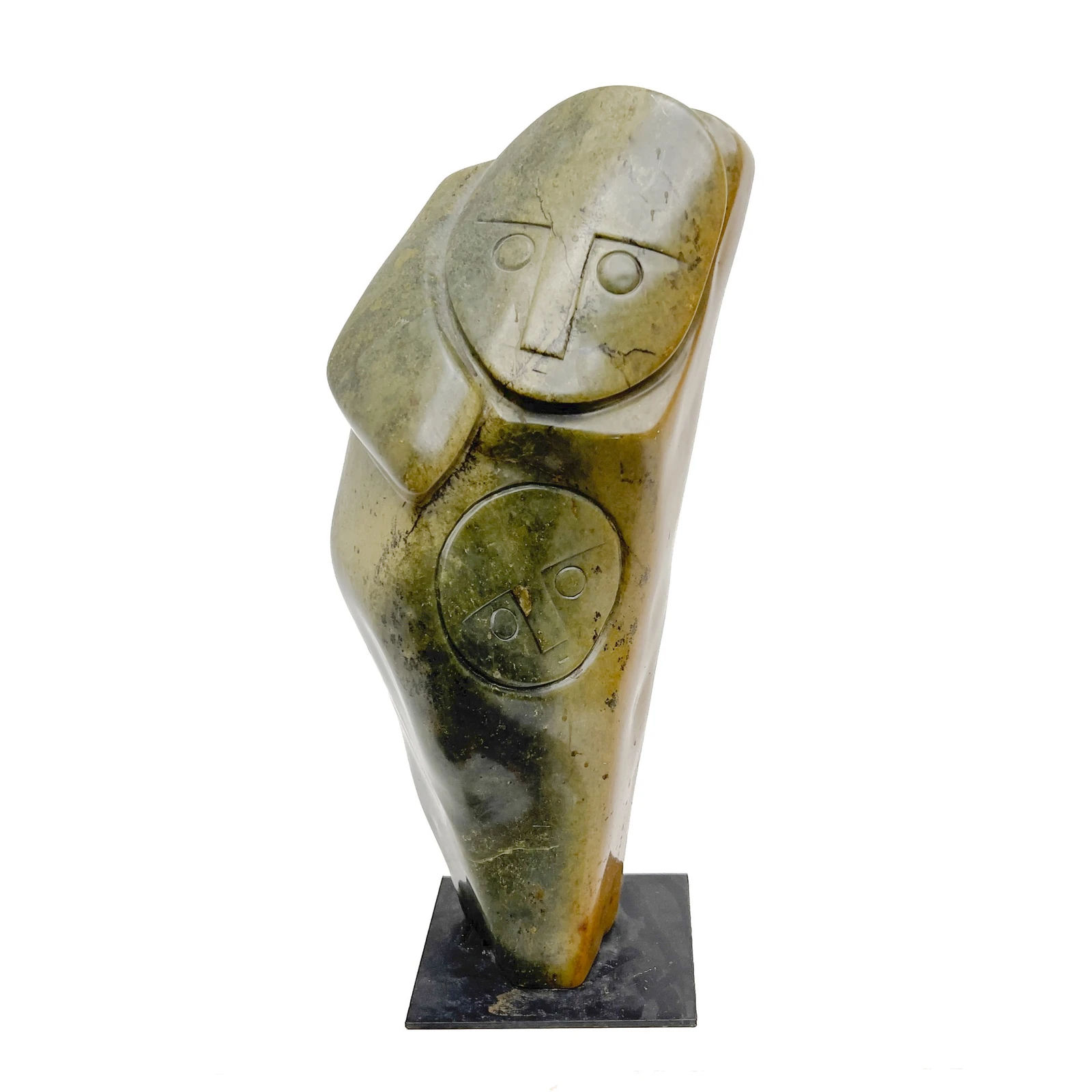
Munyaradzi became celebrated for anthropomorphic and biomorphic forms reduced to an almost emblematic simplicity. His faces are frequently constructed through a few decisive geometric elements: brows and nose forming a characteristic T-shaped configuration, eyes indicated by minimal incisions or circles, and complex sculptural masses resolved through an exacting balance of planes, lines, and volumes. This economy of means gave his sculptures an unmistakable identity and a presence that feels simultaneously archaic and strikingly modern.
Behind the apparent simplicity of his work lay an unusually refined understanding of stone. Munyaradzi worked intuitively, without preparatory drawings or precise measurements, allowing the natural shape of the block to guide the emerging image. He described the process as a harmonious relationship between himself and the stone. Rough, untouched passages of material were often set against carefully polished surfaces, turning the contrast between natural matter and human intervention into one of the central expressive forces of his sculpture.
His practice also carried a profound spiritual dimension. Raised within Shona cultural traditions and born into a family connected to a mhondoro, a traditional spiritual authority, Munyaradzi drew upon nature, human relationships, faith, ancestral traditions, and the metamorphosis of living forms. Human beings, animals, plants, and spiritual presences often seem to merge within his sculptures, forming a highly personal sculptural cosmology. The Met specifically notes his adherence to ancestral traditions and his recurring effort to express dimensions of spirituality through his work.
International recognition came remarkably early. Munyaradzi’s work was included in New African Art: The Central African Workshop School, a touring exhibition organized through The Museum of Modern Art (MoMA) in New York that circulated through American museums and universities beginning in 1968. In 1971 his sculpture appeared in the landmark exhibition Sculpture Contemporaine des Shonas d’Afrique at the Musée Rodin in Paris. He subsequently exhibited extensively in Europe, the United States, and Africa, including significant solo presentations in London and Los Angeles.
Today, Henry Munyaradzi is recognized as one of the defining figures of the first generation of modern Zimbabwean stone sculpture. His work is represented in the collections of The Metropolitan Museum of Art in New York and The British Museum in London; the latter holds several sculptures by the artist, including Zimbabwe Stele, Horned Head, and Protector. His work is also represented in the National Gallery of Zimbabwe and other important museum and private collections internationally.
Through the purity of his forms, the spiritual concentration of his imagery, and a sculptural vocabulary that is immediately recognizable as his own, Munyaradzi became one of the defining voices of modern African sculpture. His work brings local cultural memory into dialogue with the universal formal language of modernism—a capacity to speak simultaneously from a specific tradition and to fundamental human experience that secured “Henry” a singular place in the art of the twentieth century.