Grandmother and Grandchild
1996
Opal serpentine, hand-carved and polished
About the work
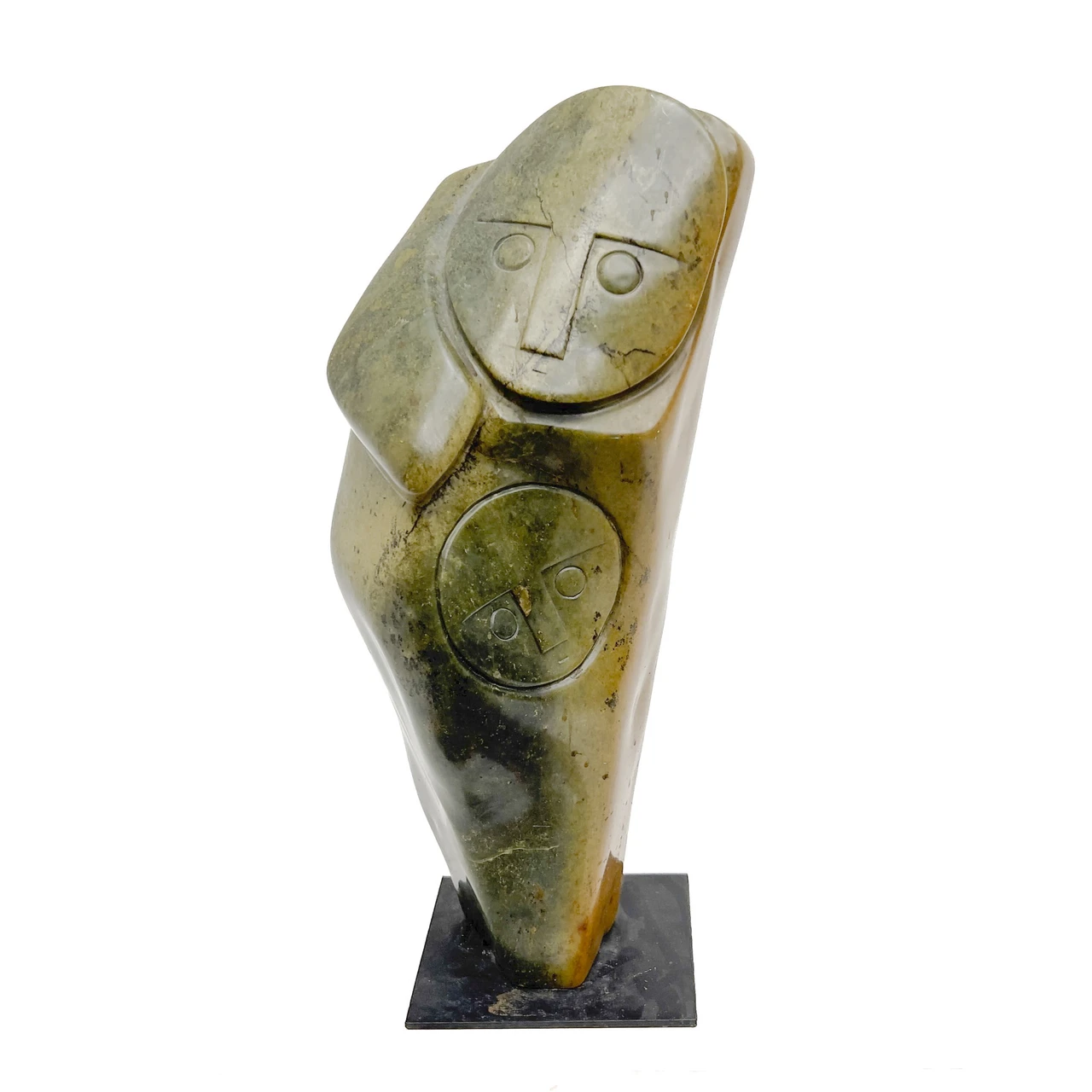
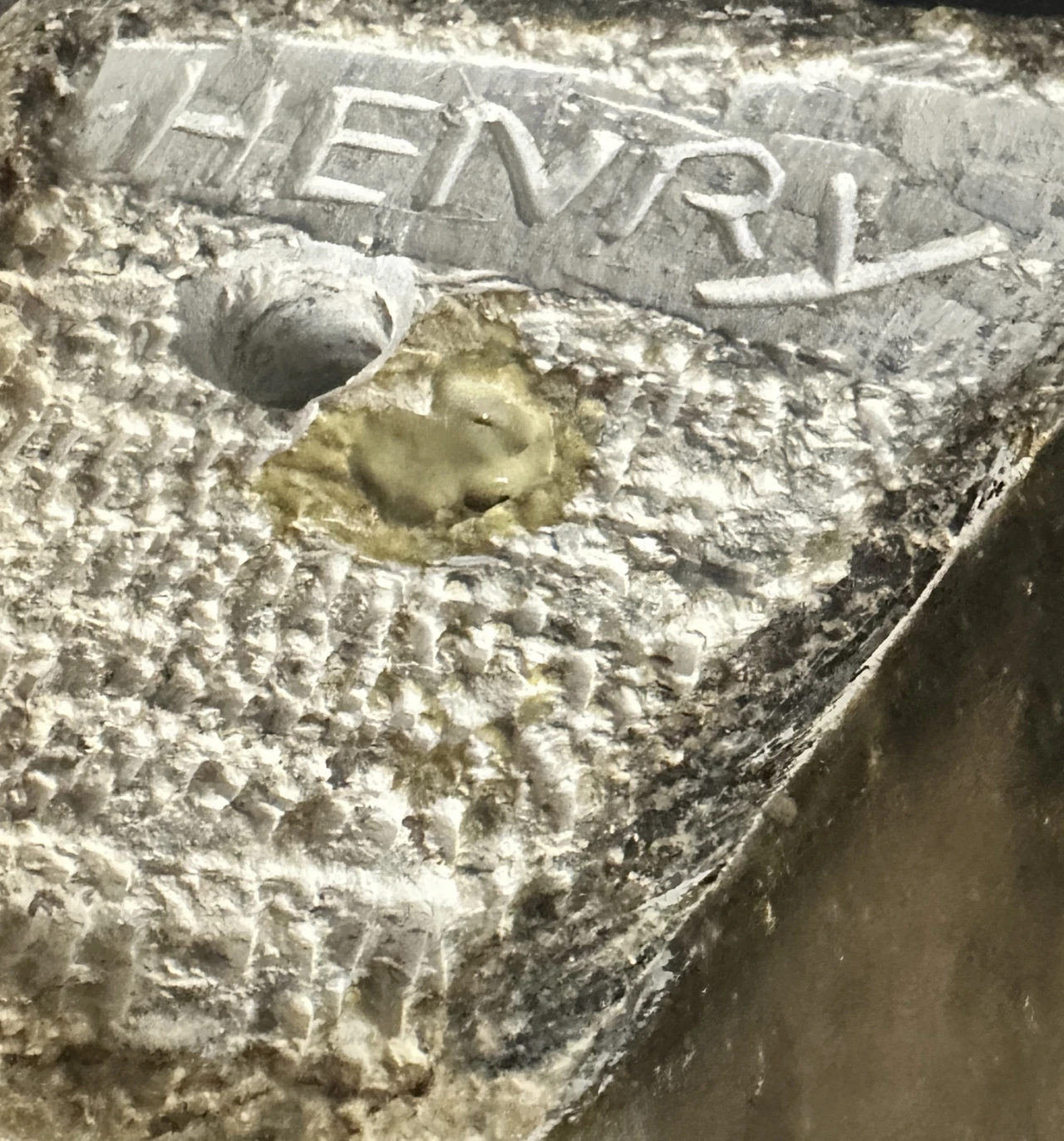
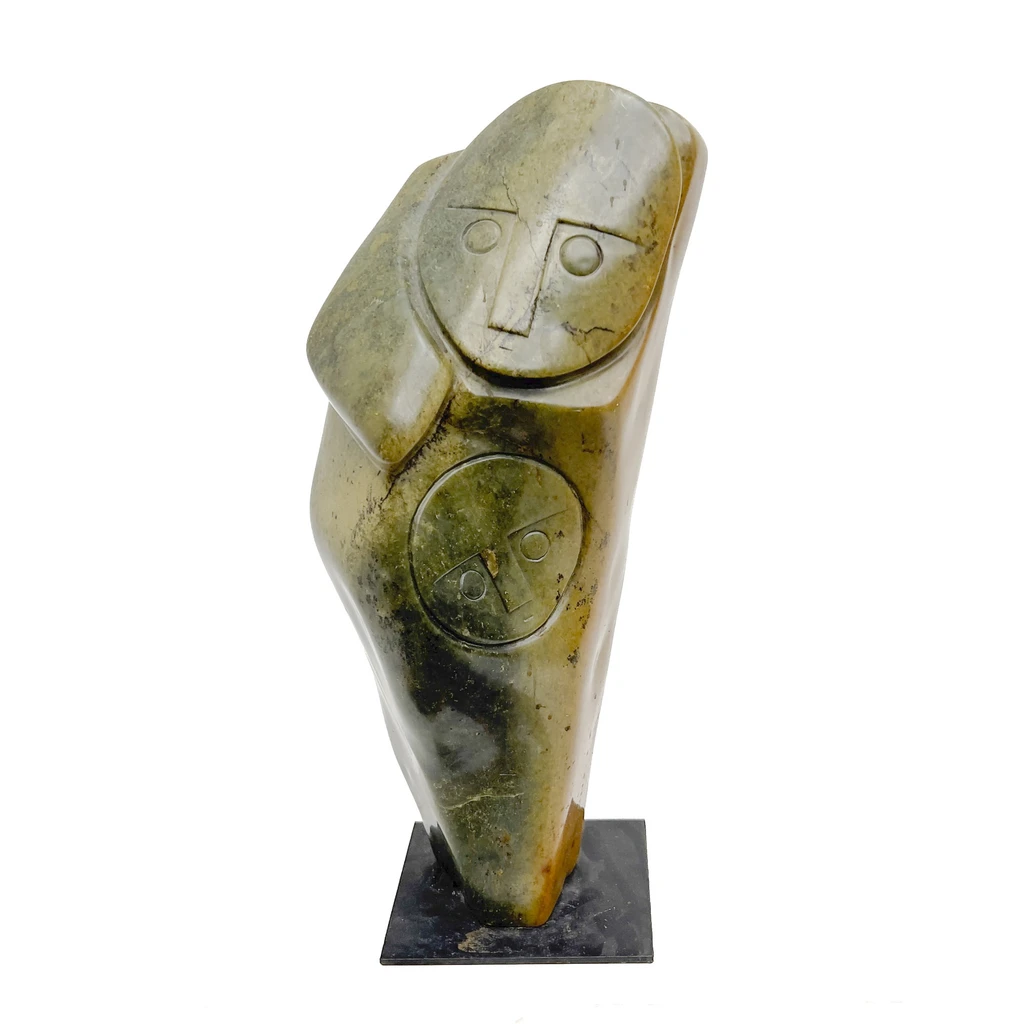
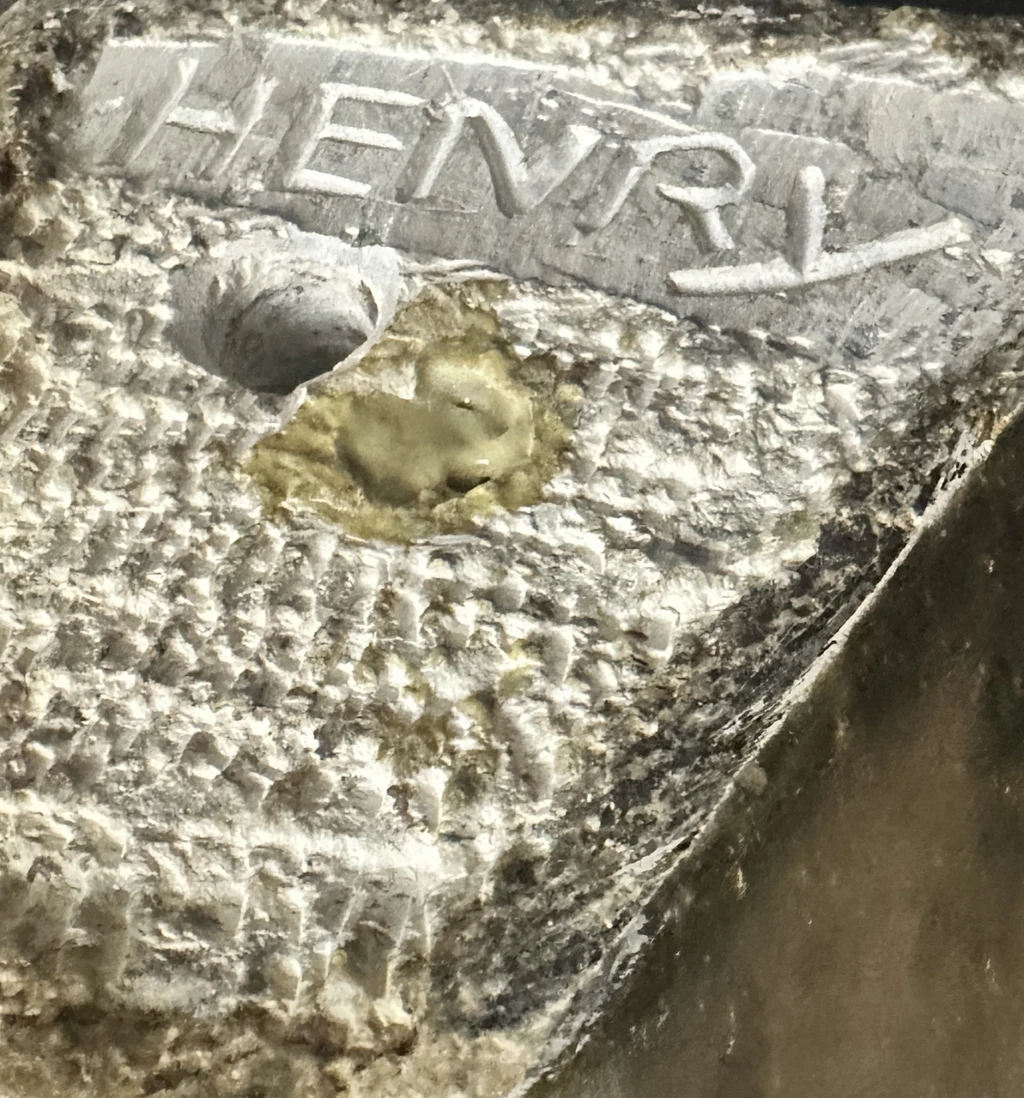
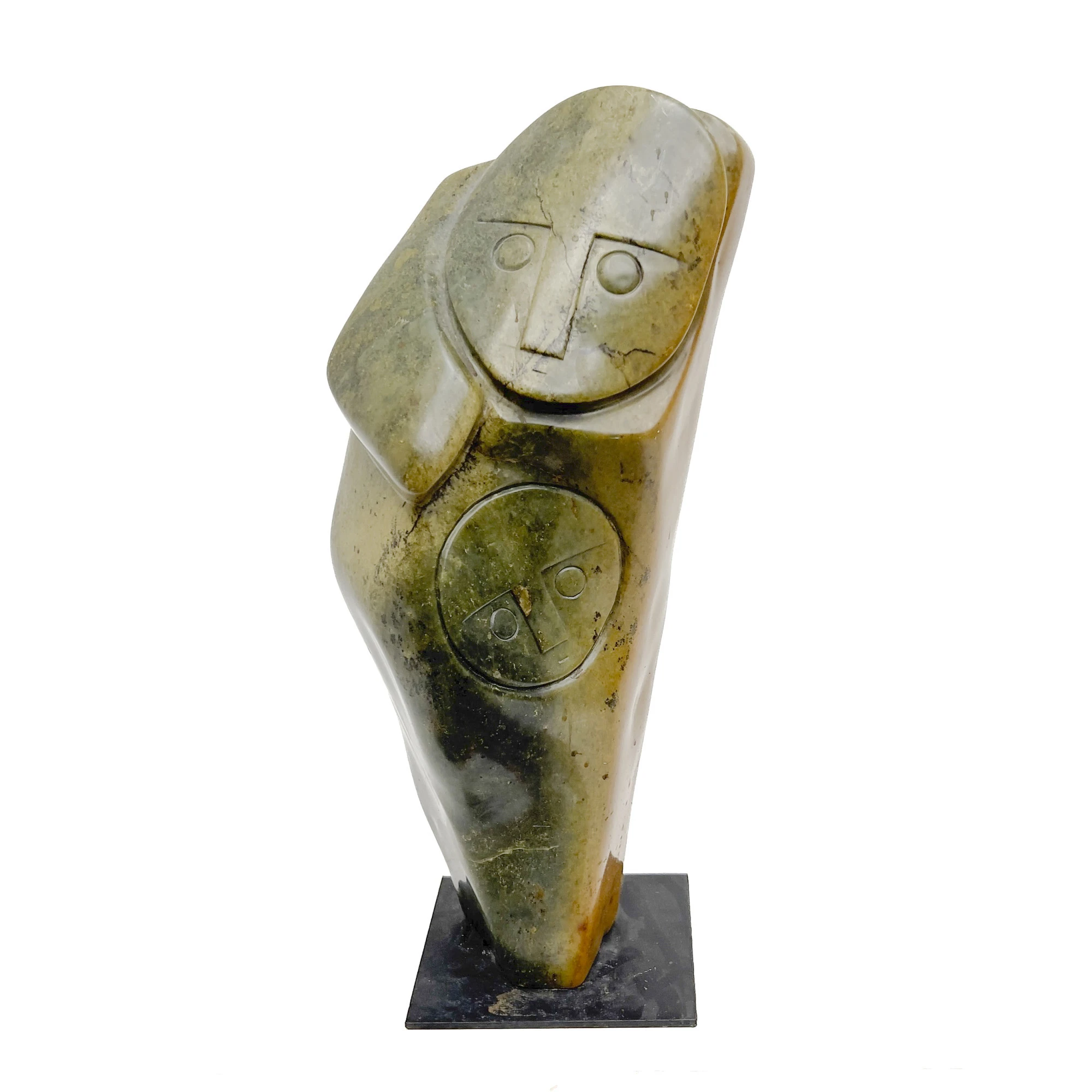
Grandmother and Grandchild is a compelling late work by Henry Munyaradzi in which one of the most profound themes of his practice—family, generational continuity, and the spiritual bonds between human beings—is distilled into a form of remarkable economy and monumentality.
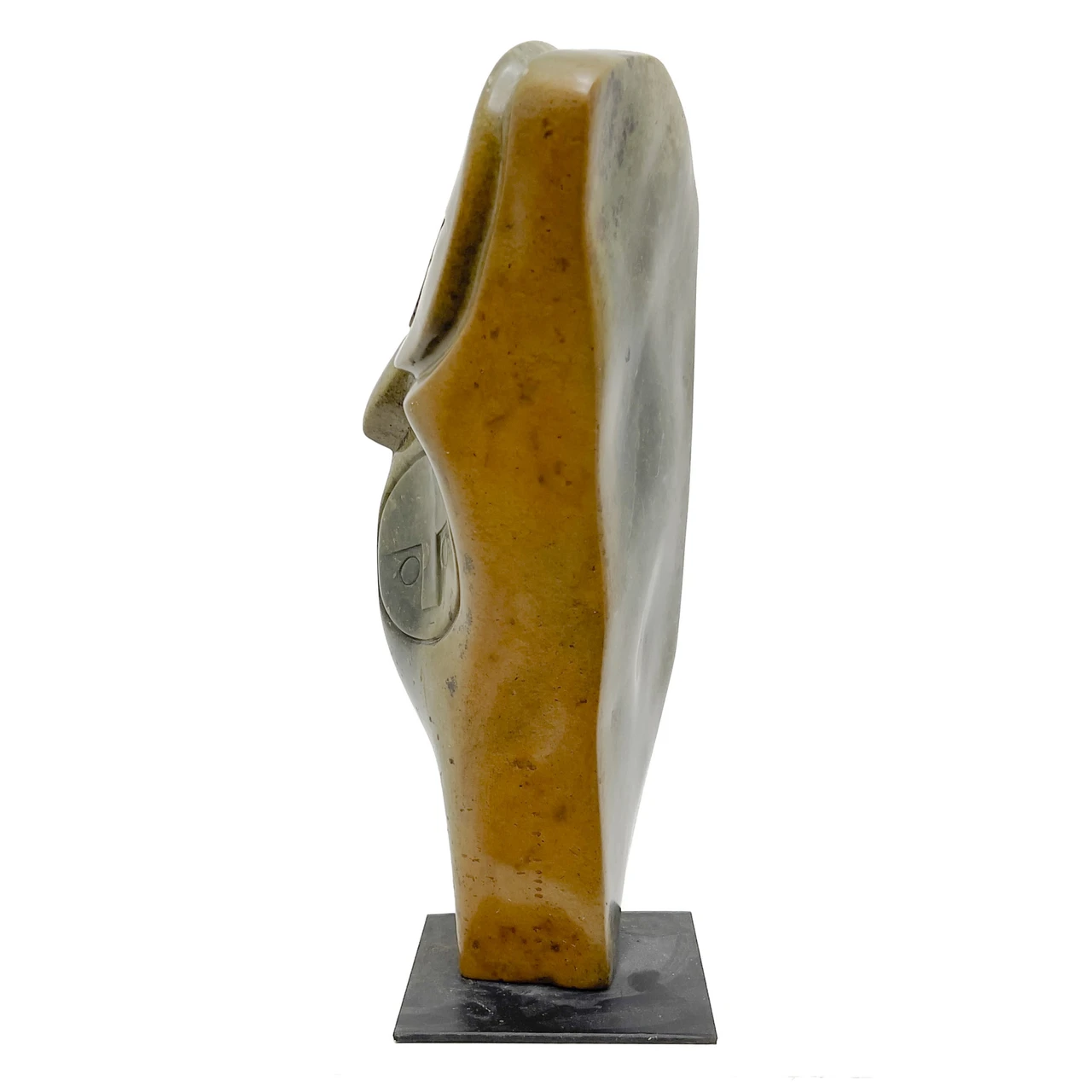
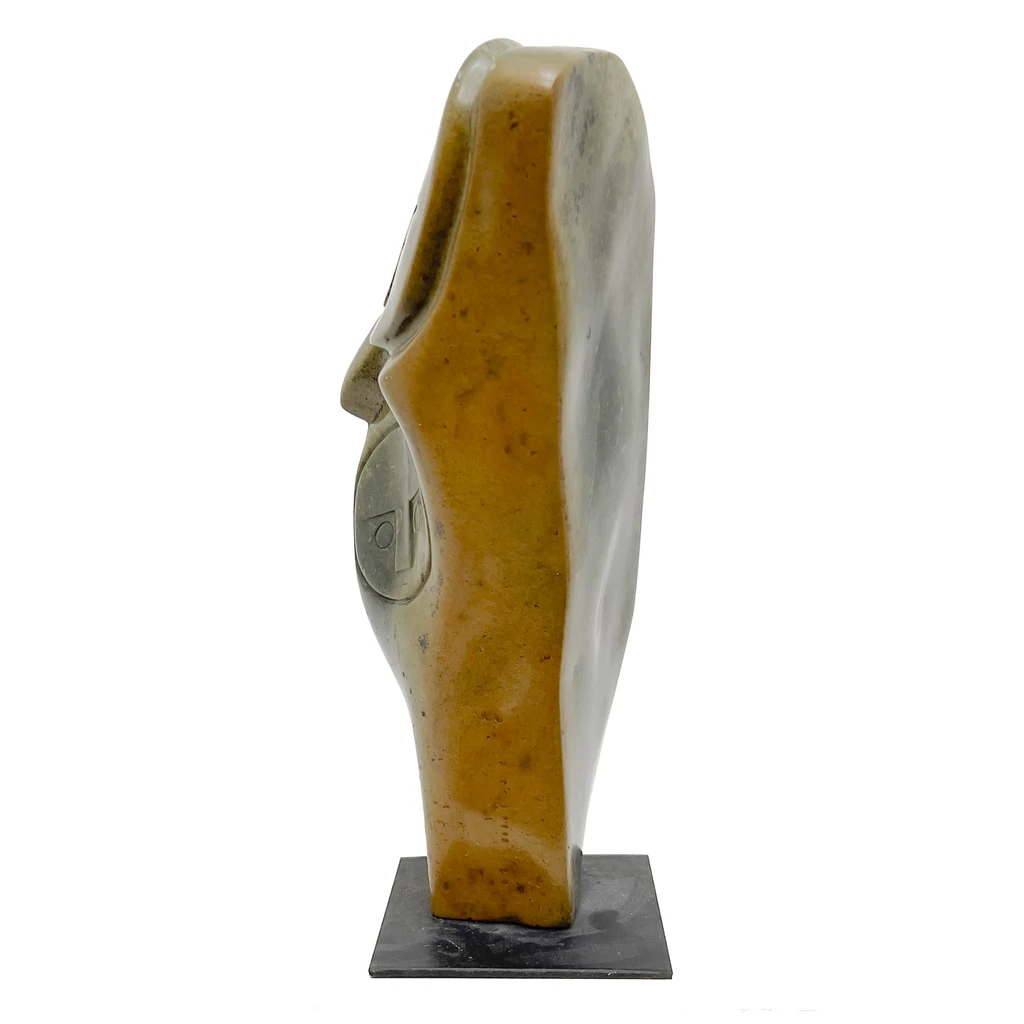
From a single upright mass of stone, Munyaradzi creates two inseparable presences. The grandmother’s large face occupies the upper register of the sculpture, while the child’s face is embedded directly within the central mass of her body. The two figures do not merely appear together: they emerge from the same stone. An intimate familial subject is thereby transformed into a universal image of protection, continuity, and the transmission of memory from one generation to the next.
The sculpture displays Munyaradzi’s unmistakable formal vocabulary. Each face is reduced to a few precisely articulated geometric signs: the brow and elongated nose establish his characteristic T-shaped structure, circular eyes are minimally incised, and the surrounding volume remains governed by the natural profile of the stone. The Metropolitan Museum of Art identifies precisely this balance between hard-edged geometry and rounded organic form as a defining quality of Munyaradzi’s sculptural language.
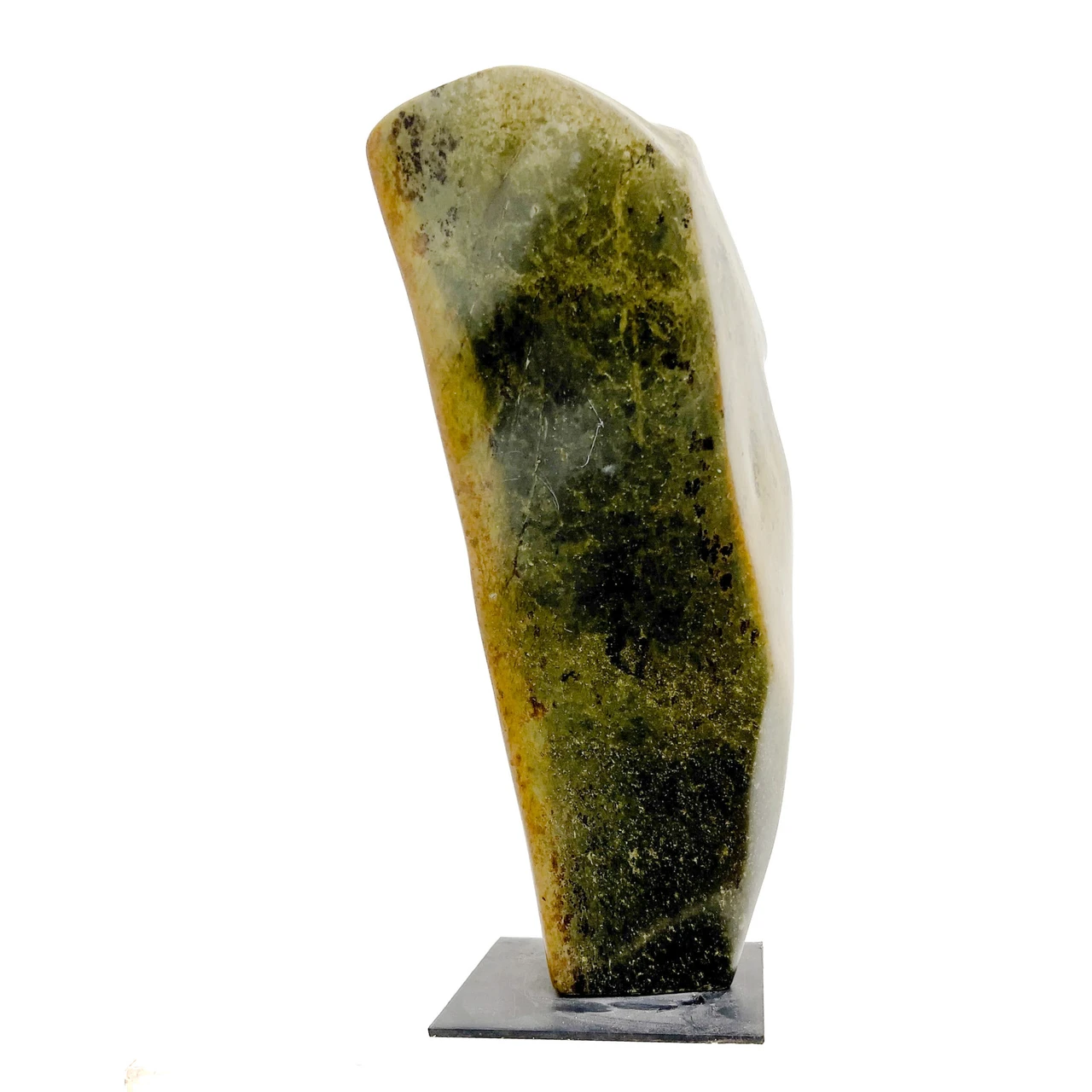
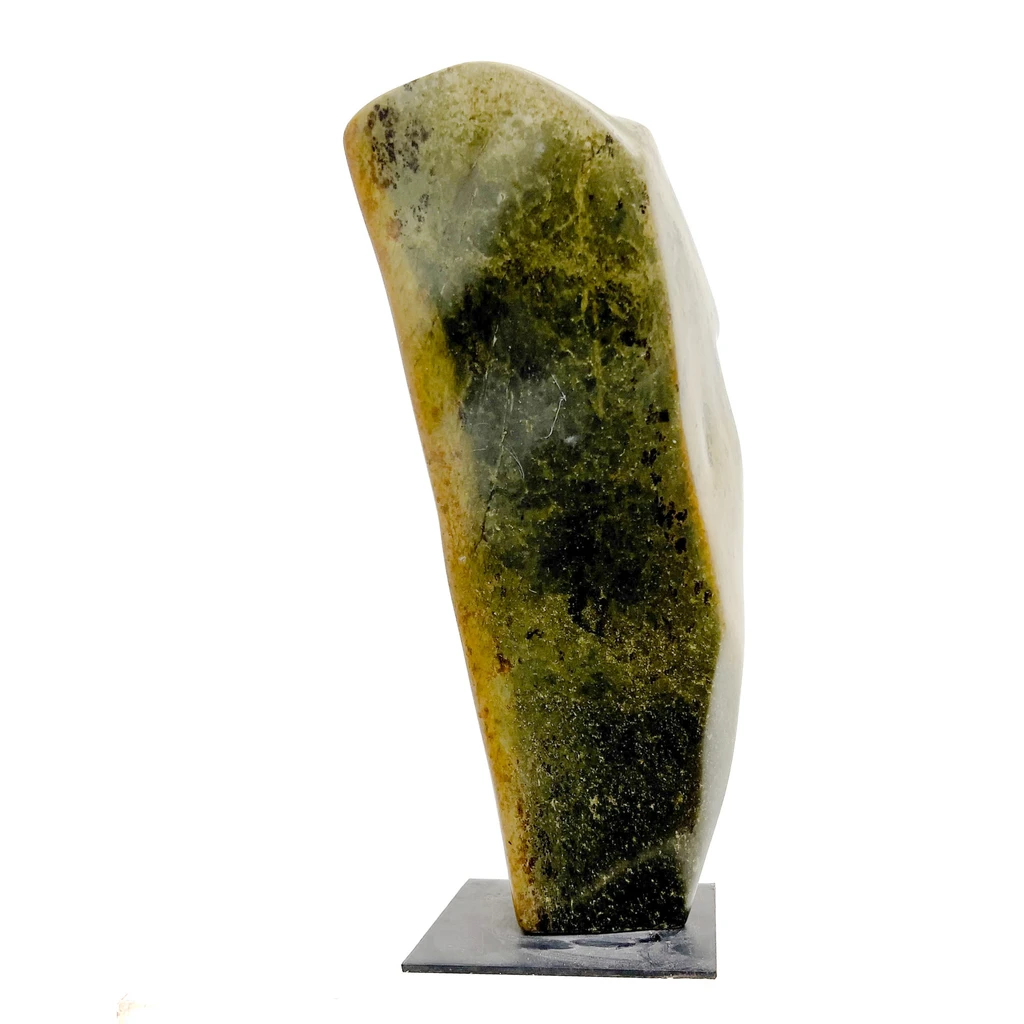
The stone itself is equally integral to the work. Cream, olive-green, golden, and near-black mineral passages move naturally across its surface, creating an internal painterly rhythm of their own. Rather than suppressing the character of the material, Munyaradzi allows the sculpture to develop in dialogue with it. Highly polished areas reveal the depth and luminosity of the mineral, while its natural variations remain visible, producing the characteristic tension in his work between geological matter and deliberate human intervention.
Family and intergenerational relationships recur throughout Munyaradzi’s oeuvre. In Grandmother and Grandson (1990), he likewise explores the relationship between an elder and a child, while the monumental Glorious Family, c. 1990, integrates several familial figures and symbols within a single continuous mass. In Grandmother and Grandchild, however, the idea is distilled almost to an emblem: two identities remain distinct while physically belonging to the same whole.
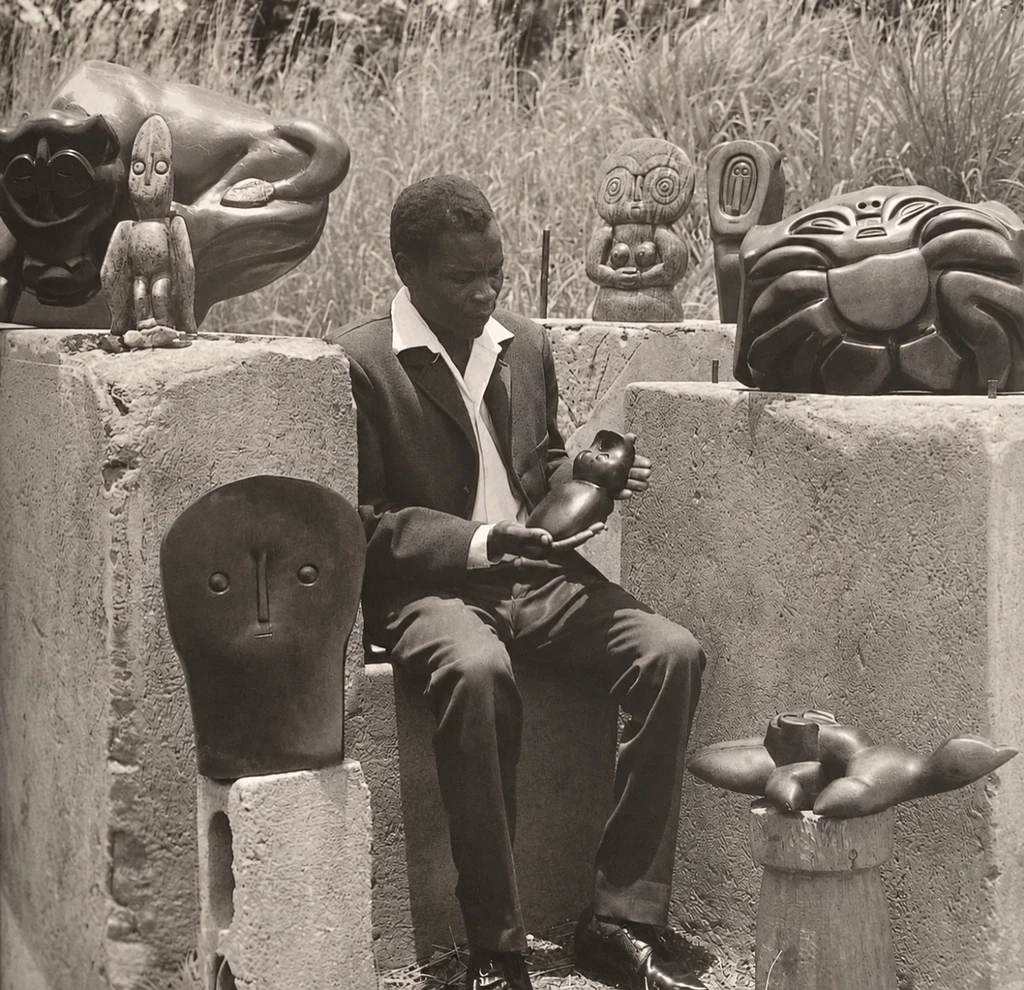
Munyaradzi’s distinctive visual language is supported by a significant international institutional history. His sculptures are represented in The British Museum, which currently holds five works by the artist, including Zimbabwe Stele, Horned Head, and Protector, as well as The Metropolitan Museum of Art in New York. At the beginning of his career his work was included in New African Art: The Central African Workshop School, the two-year American touring project circulated by The Museum of Modern Art (MoMA) beginning in 1968. In 1971, the generation of Zimbabwean stone sculptors to which he belonged was presented in the landmark Sculpture Contemporaine des Shonas d’Afrique exhibition at the Musée Rodin in Paris.
Grandmother and Grandchild brings together the defining qualities of Munyaradzi’s mature practice: radical economy of form, monumentality within an intimate scale, spiritual concentration, and an exceptional sensitivity to the natural character of stone. Here, an intimate image of familial closeness acquires archetypal resonance, becoming a meditation on memory, protection, and the continuity of life. It is a compelling expression of the fully developed visual language of one of the defining first-generation masters of modern Zimbabwean sculpture—a work with natural relevance both to a significant private collection of African modernism and to an institutional narrative of late twentieth-century art.