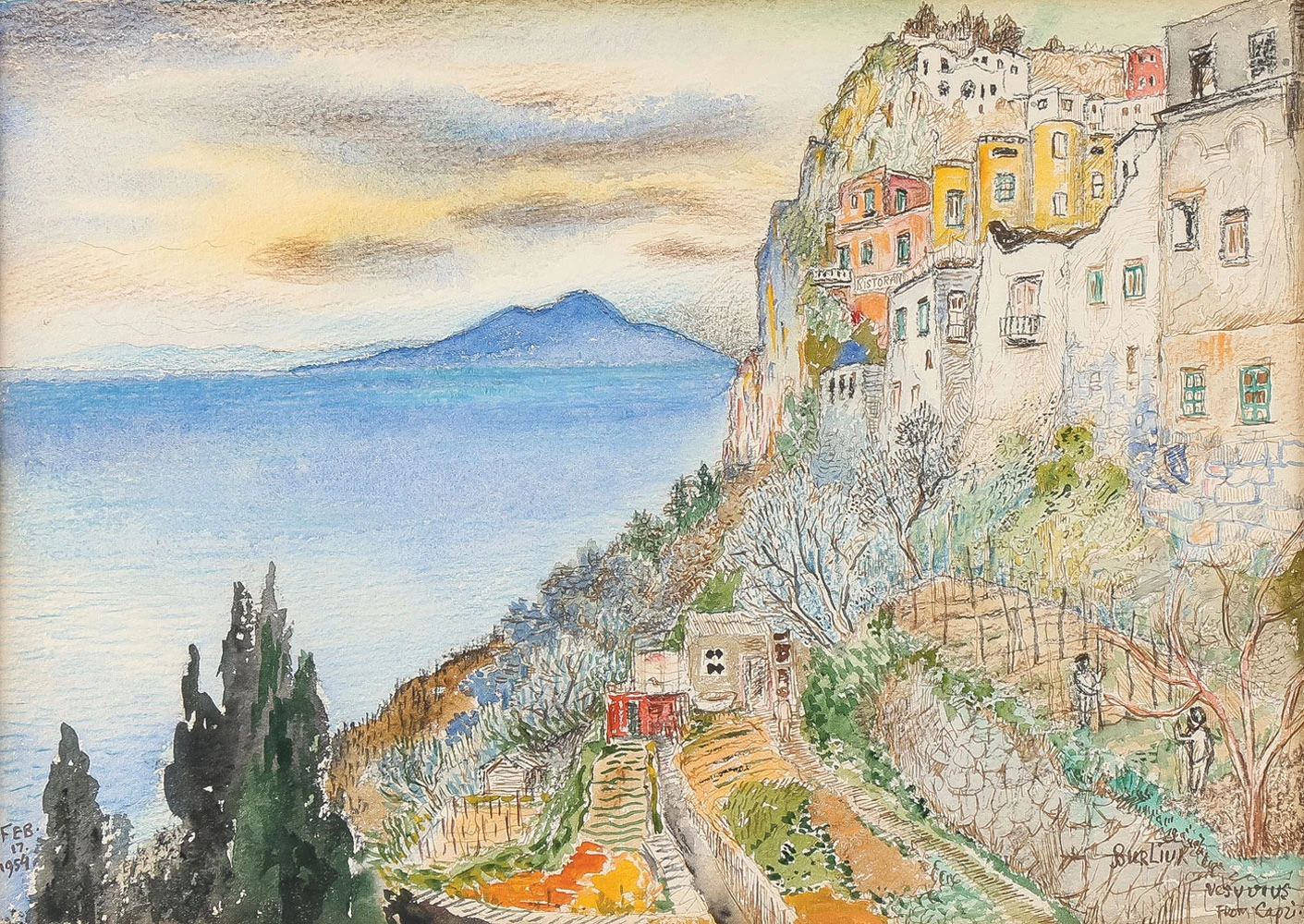
Vesuvius from the Island of Capri
1954
Watercolor
About the work
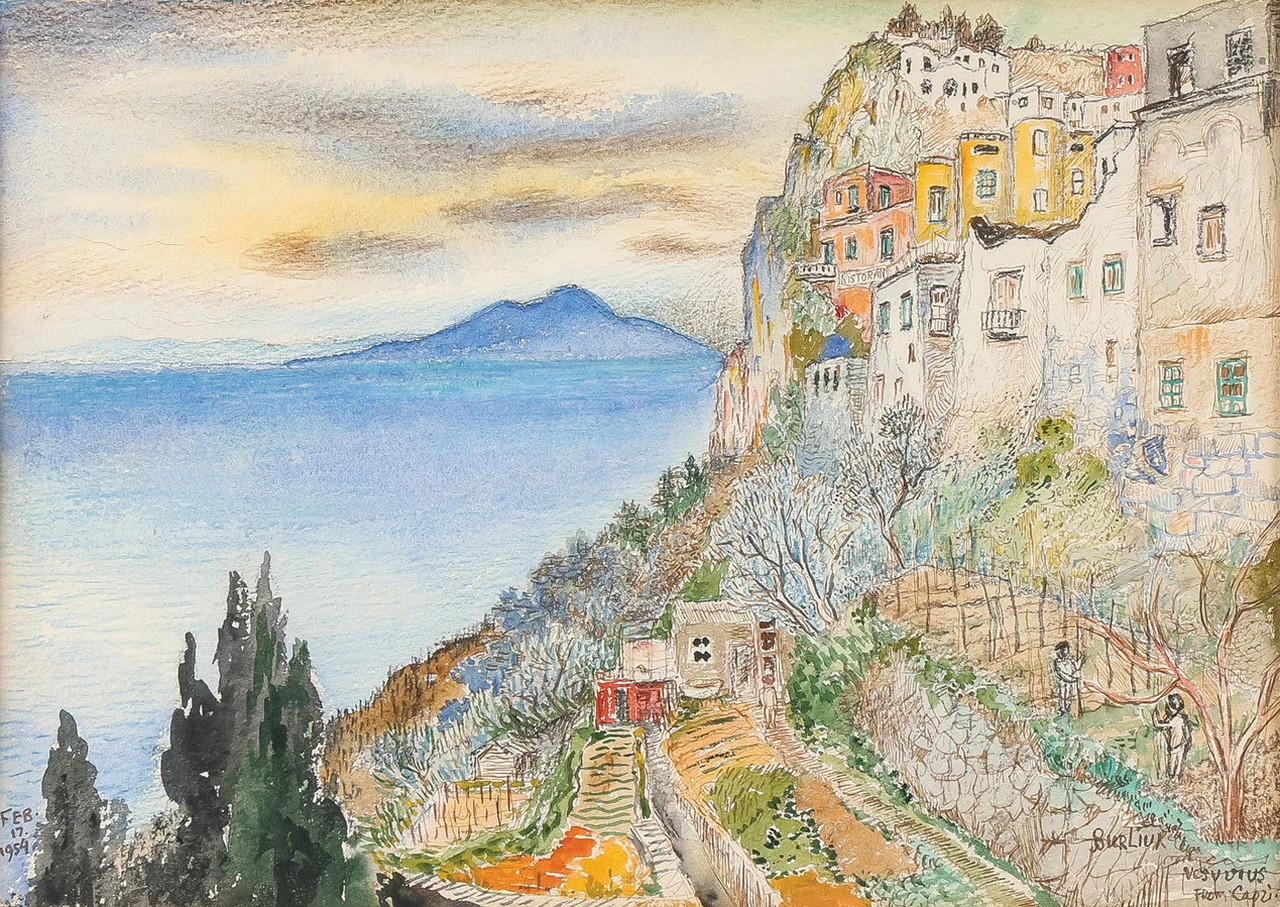
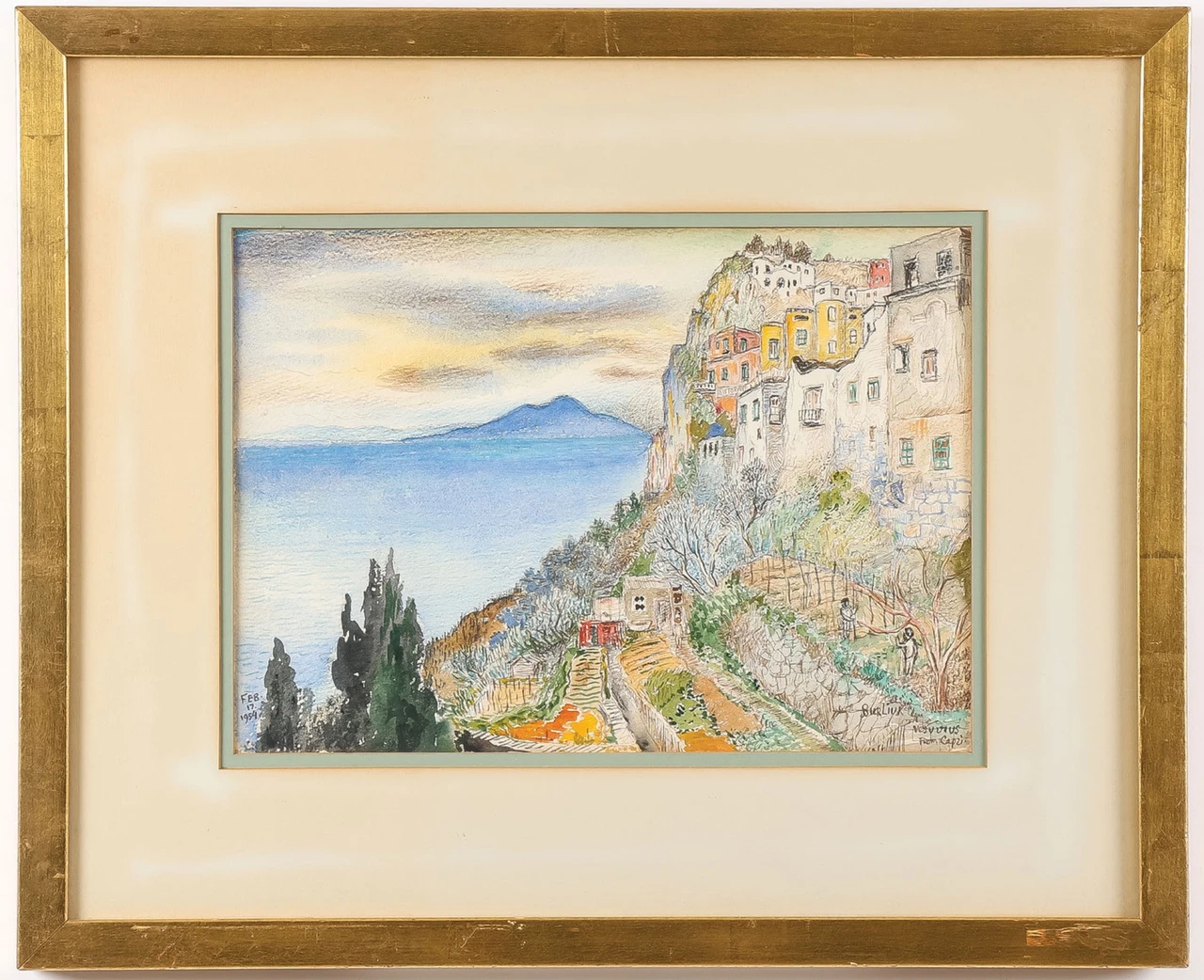
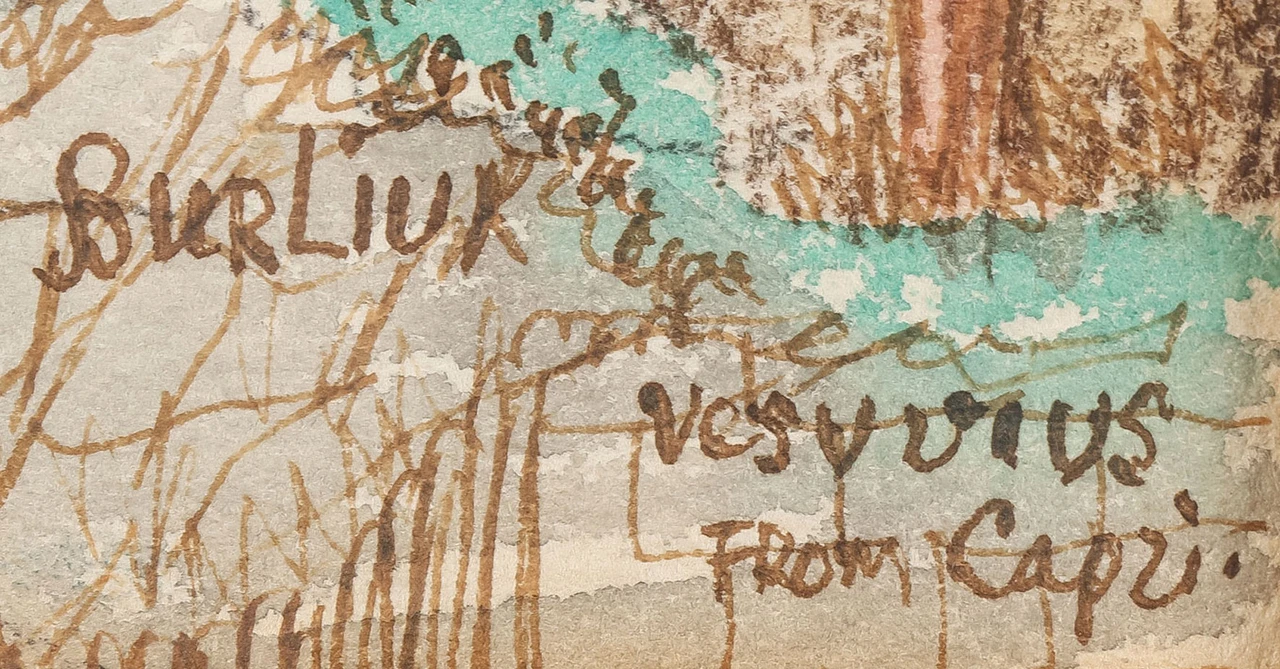
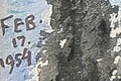
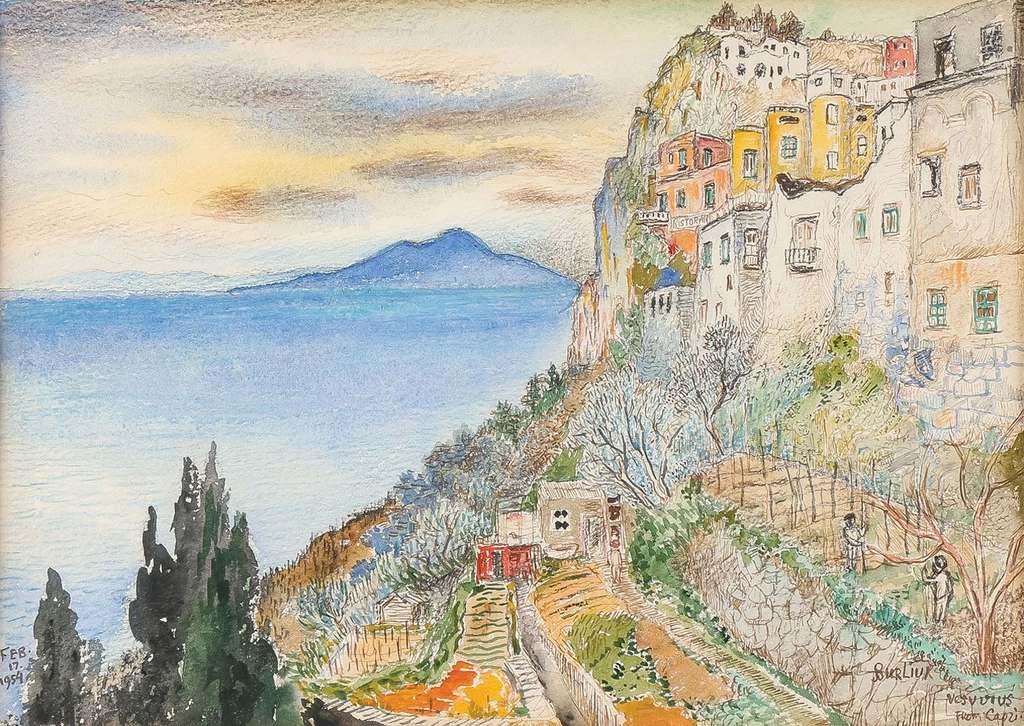
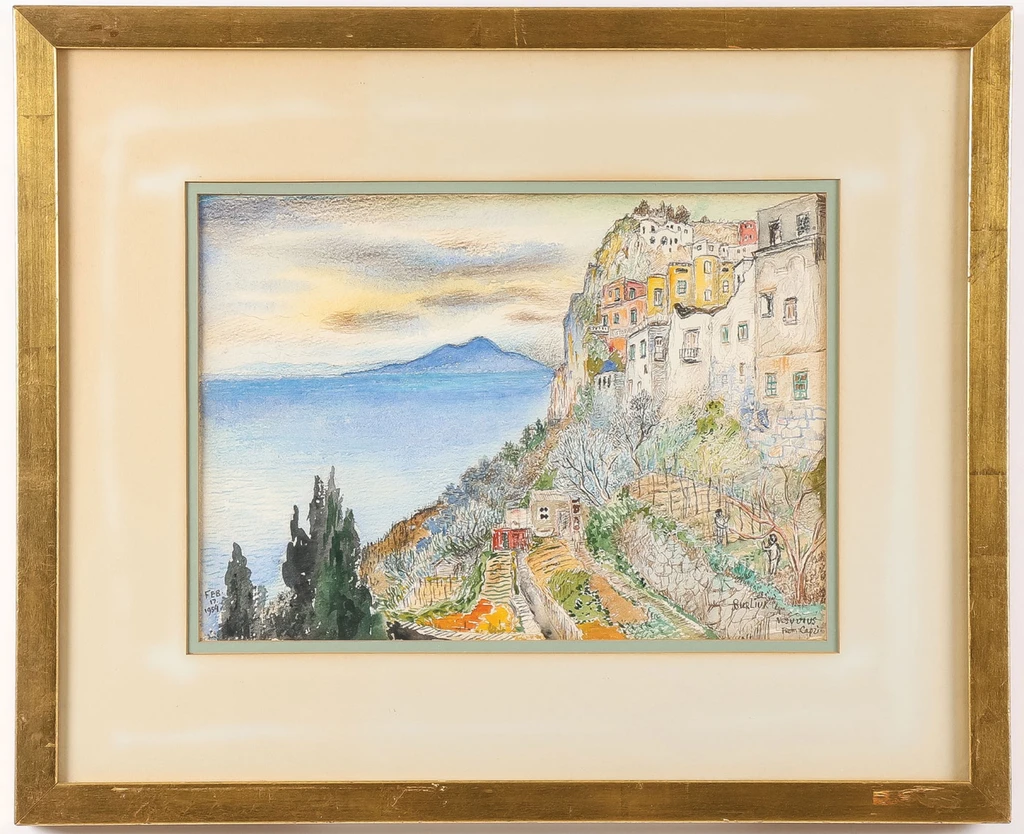
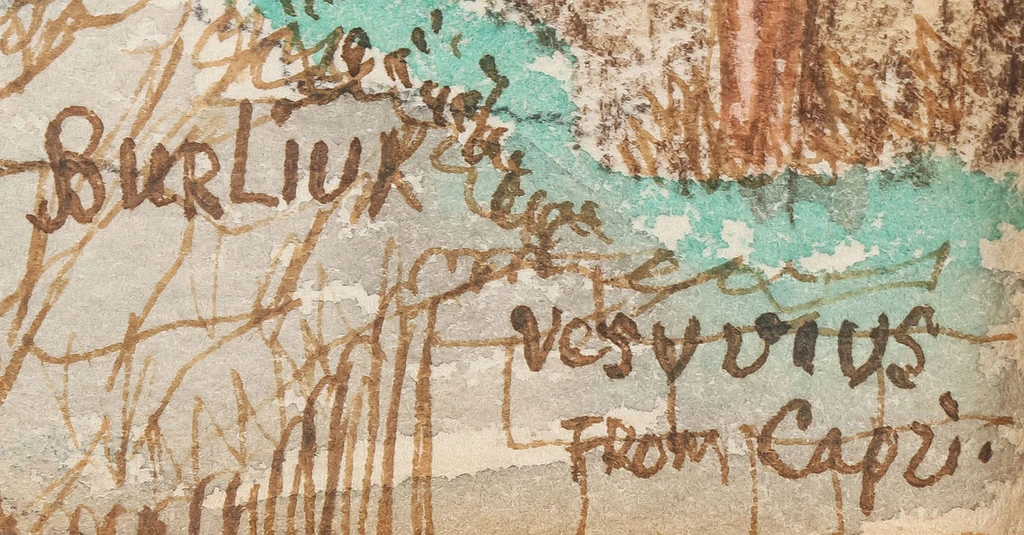
On 17 February 1954, David Burliuk created this view of Vesuvius while staying on the island of Capri. The artist himself recorded the precise date on the sheet — “Feb. 17, 1954” — signed the work and inscribed its title, “Vesuvius from Capri.” The work therefore possesses an unusual degree of documentary specificity: not only the artist and year are known, but the exact day, place, and subject before him.
The composition opens from the slopes of Capri toward the Bay of Naples. At right, houses seem to rise directly from the cliff; below them, terraces, gardens, and roads descend toward the sea. In the distance, almost dissolving into the blue atmosphere, appears the silhouette of Vesuvius. Burliuk combines delicate, animated drawing in the architecture and vegetation with freer passages of color across the sea and sky. The specificity of the island gradually gives way to air, light, and distance, allowing a closely observed landscape to acquire a lyrical, almost Romantic resonance.
The work was created during Burliuk’s European journey of 1954, in which southern Italy played an important role. Capri, Positano, and the Bay of Naples provided the artist with a new constellation of subjects. The significance of this experience was memorably expressed by Marussia Burliuk:
“We had fulfilled our dreams of painting in nature in Italy…”
Marussia Burliuk, Color and Rhyme, no. 30, 1955
Her words illuminate the character of Vesuvius from Capri. This is not a distant memory of Italy reconstructed later in the studio, but an immediate encounter with a place. Its precise date gives the sheet the quality of a visual entry in a travel diary — Capri, 17 February 1954.
The importance of Capri within Burliuk’s work of this period is also demonstrated by the large painting Marina Grande, Capri, created in the same year. Only months later it was exhibited as no. 2 in his solo exhibition David Burliuk: Paintings of U.S.A. and Europe at ACA Gallery in New York, held from 29 November to 18 December 1954, and was subsequently reproduced in Color and Rhyme, no. 29. Burliuk’s Italian experience thus entered his public American exhibition history almost immediately.
The intimate scale of Vesuvius from Capri preserves something that larger exhibition paintings inevitably transform: the sensation of a first encounter. The lightness of the line, openness of the space, and immediacy of color are essential to the work. The human world of Capri — its houses, gardens, terraces, and roads — occupies the foreground, while beyond it open the sea and the distant volcano.
Vesuvius is not dramatized. It appears quiet, remote, almost immaterial. Between the island and the mountain stretches an immense expanse of blue water and air. This distance gives the small landscape its distinctive poetic character: a simultaneous intimacy with the visible world and a sense of looking far beyond it.
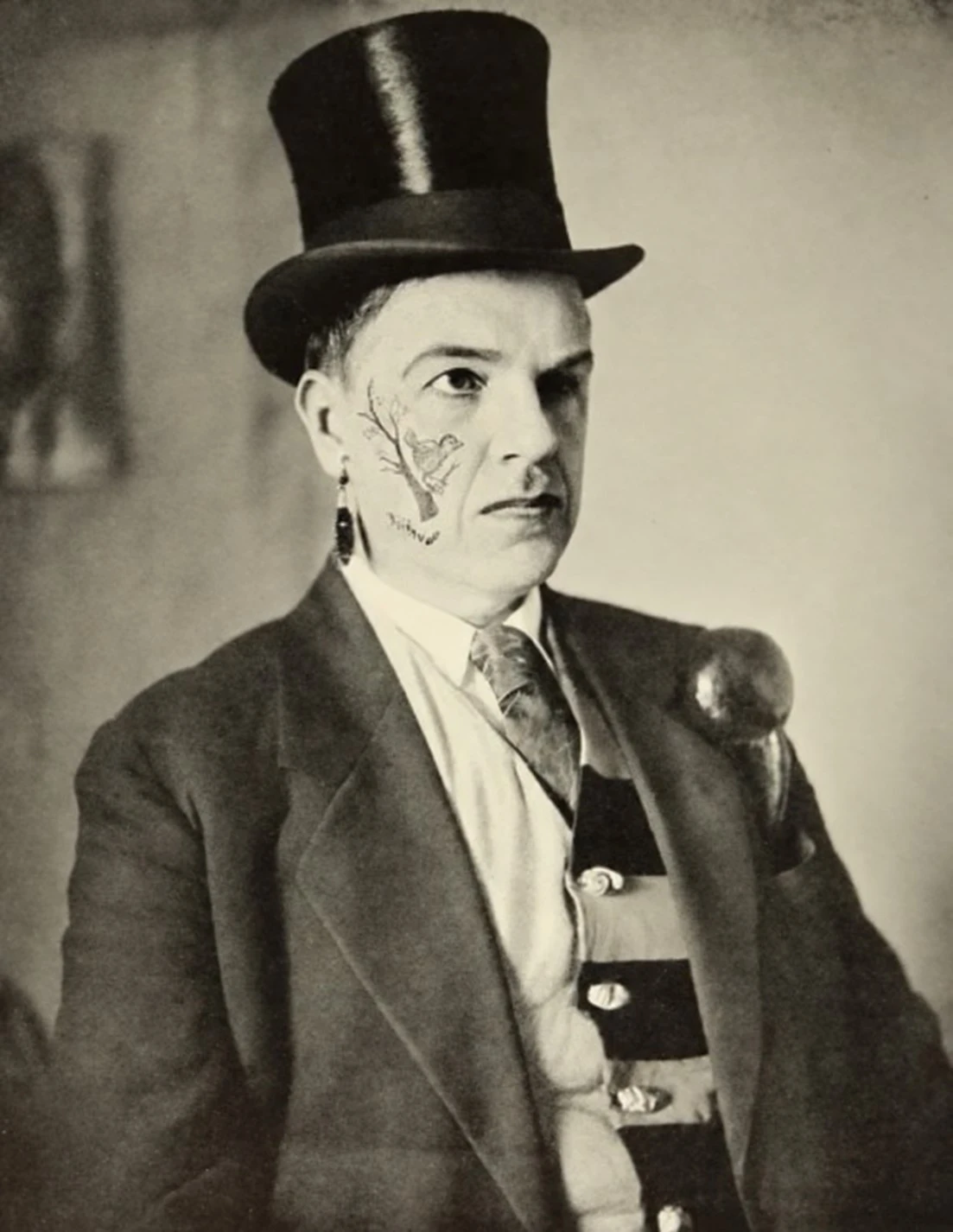
For Burliuk, one of the key figures of the early twentieth-century avant-garde, travel remained throughout his life a means of rediscovering the visible world. Here the historic figure of Futurism appears first and foremost as an attentive observer of nature. The work’s modernity lies not in dismantling the landscape tradition, but in the freedom with which a specific visual experience is transformed into color, rhythm, and space.
Vesuvius from Capri is therefore a rarely precise document of Burliuk’s late work from nature, preserving place, day, and direct artistic experience within a single sheet. Its autograph date, title, and signature make it not only an image of Italy, but a record of a particular moment in the artist’s life — the day he looked from Capri across the Bay of Naples toward Vesuvius.