L'Elefante di Giotto
1986
Etching, aquatint and screenprint in colors on Fabriano Rosaspina paper
About the work
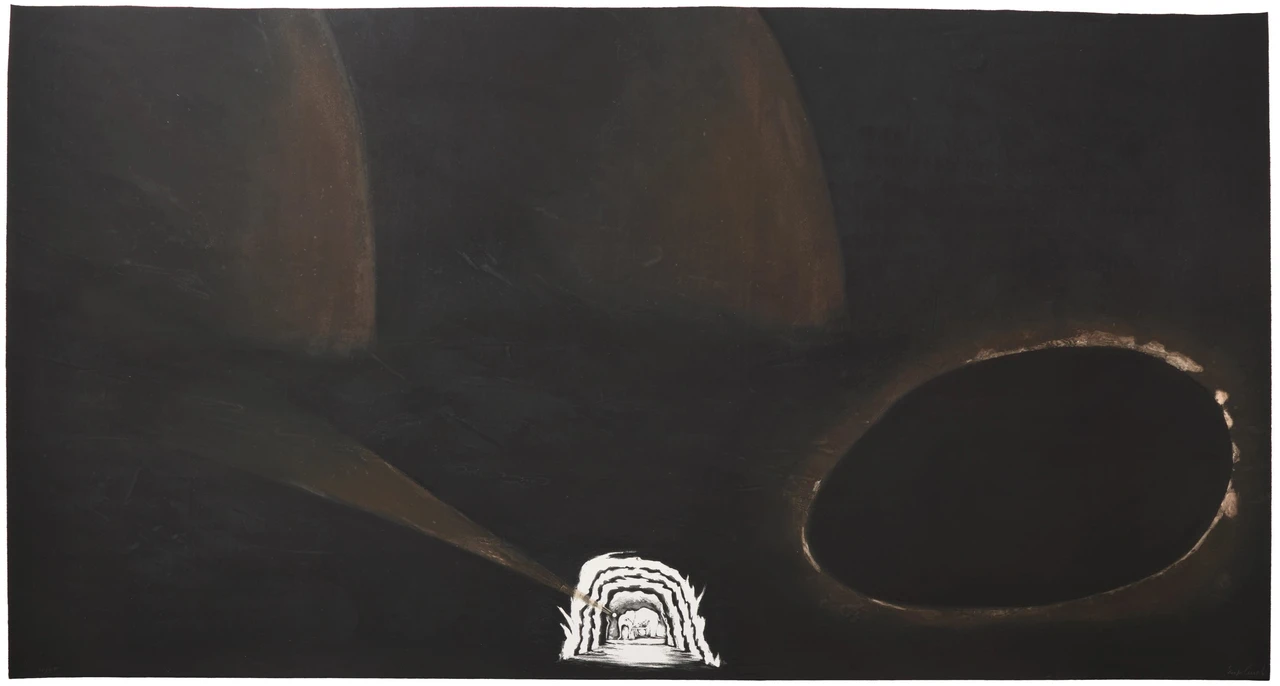
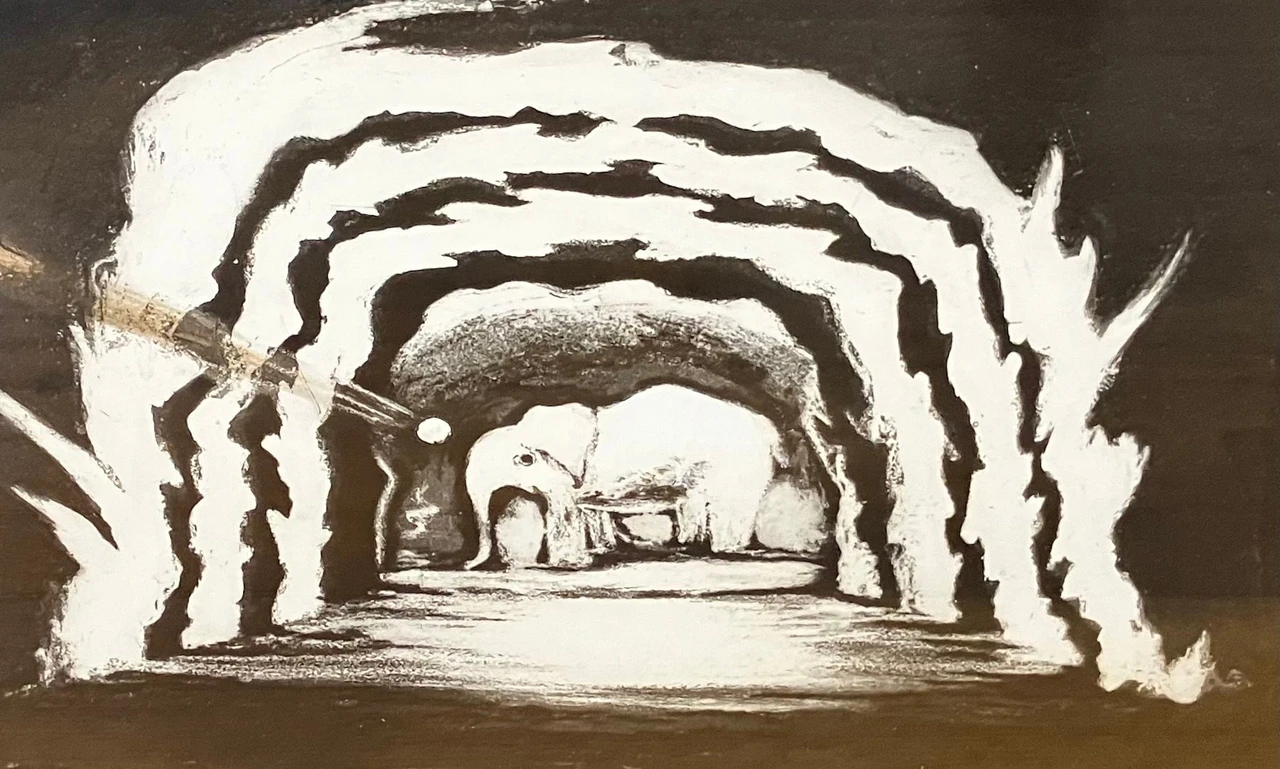
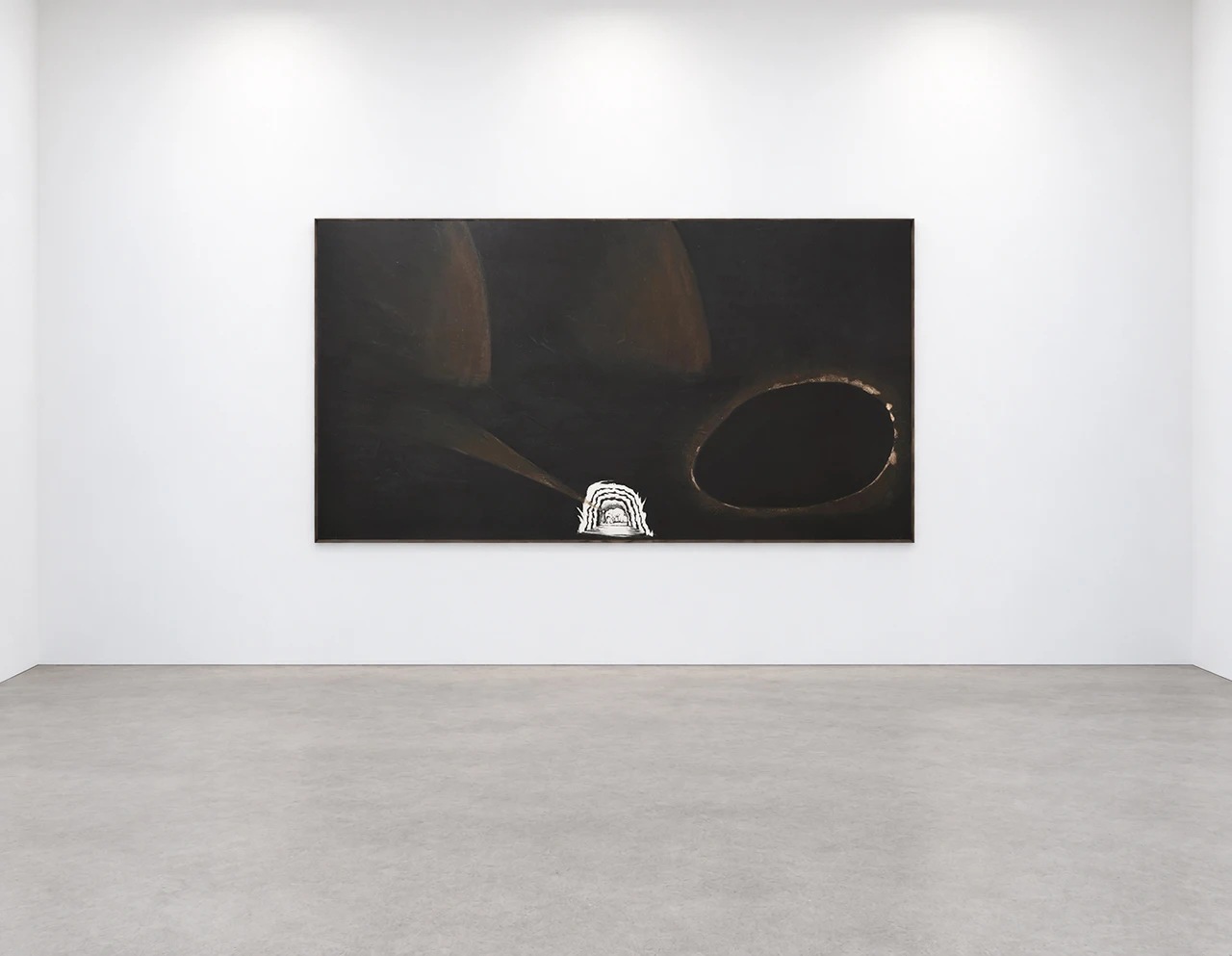
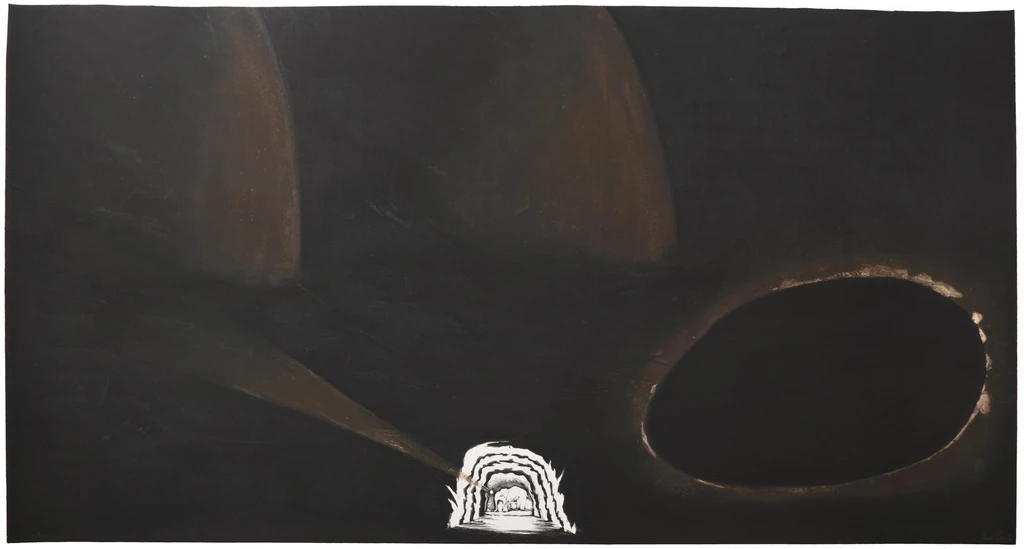
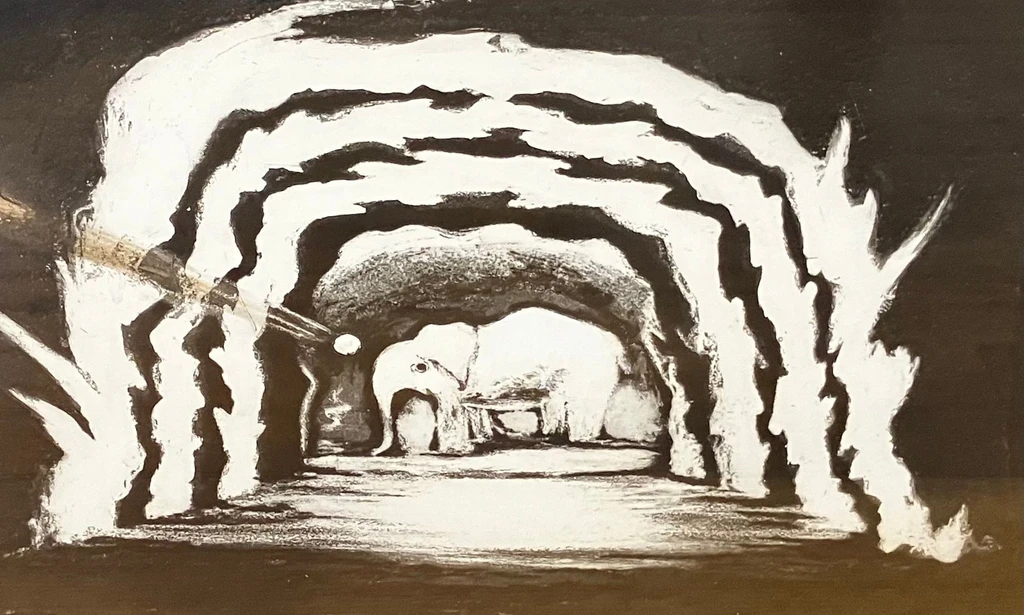
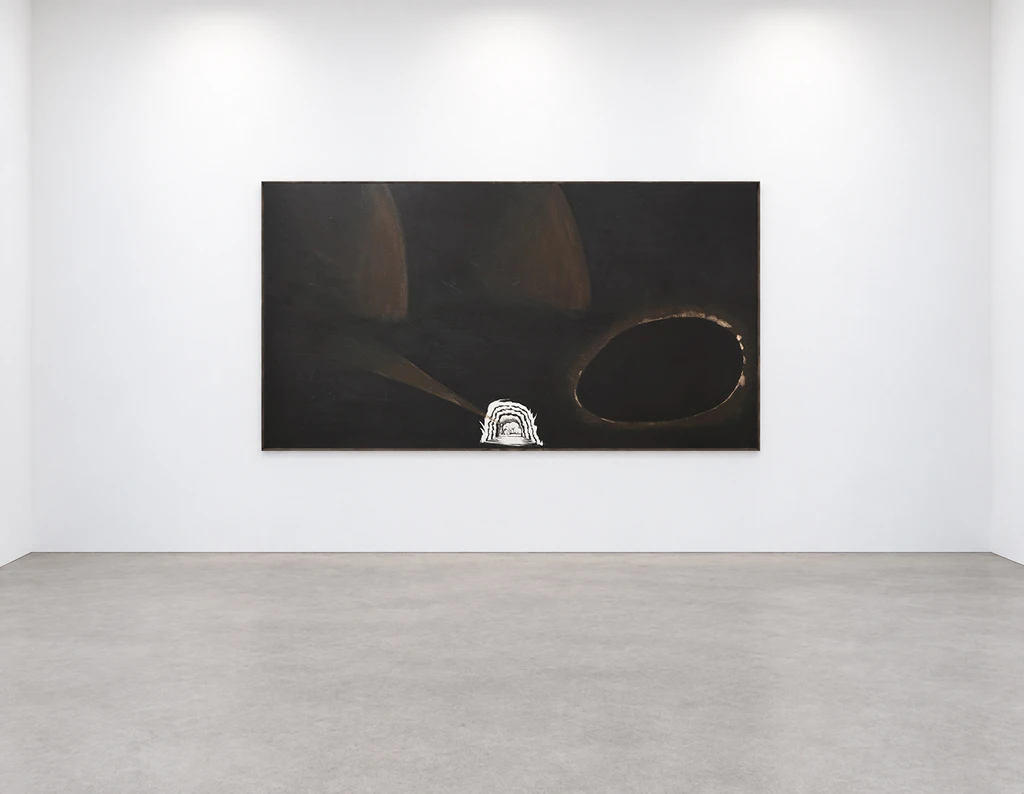
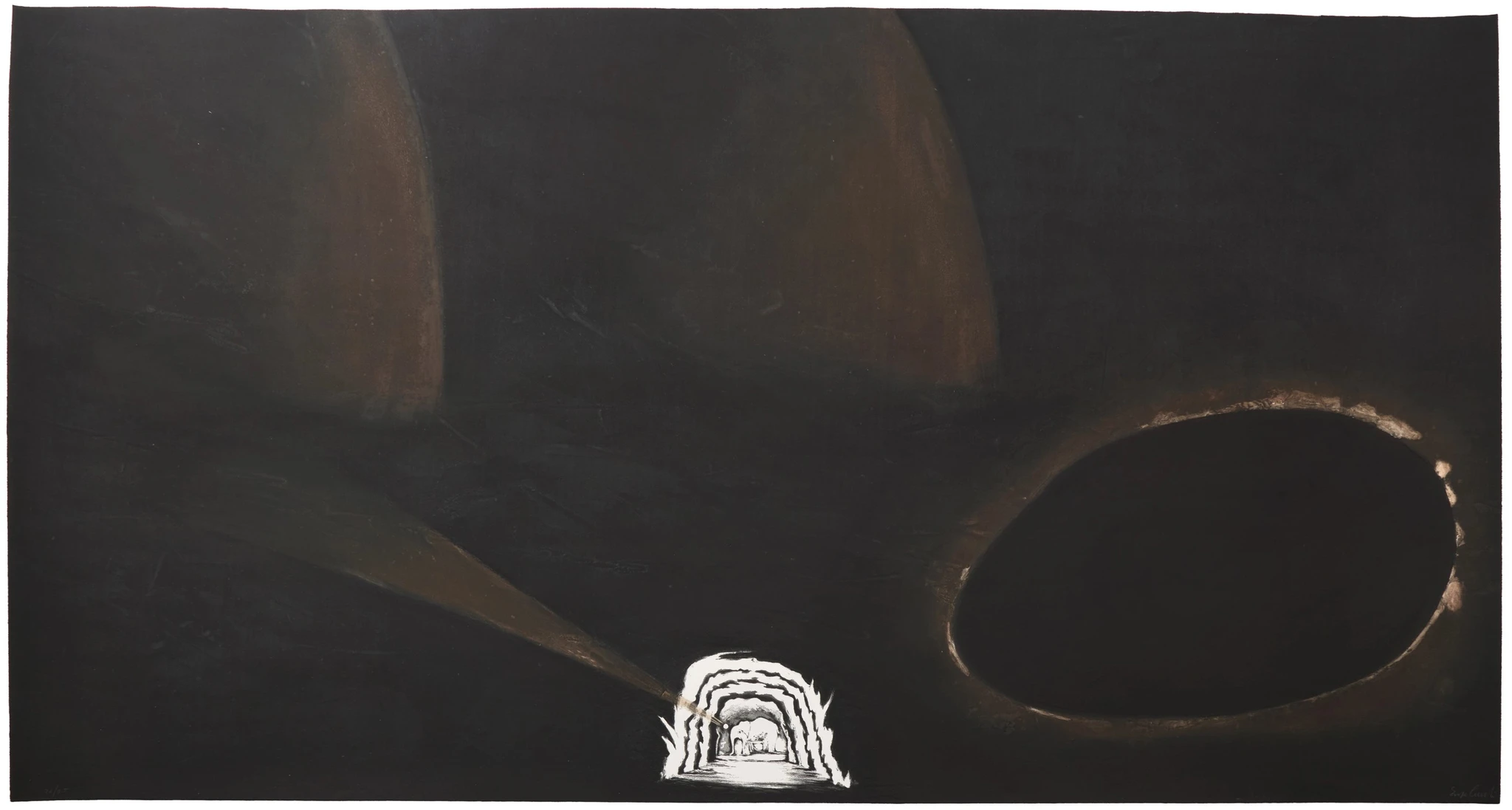
L’Elefante di Giotto is a monumental graphic work created by Enzo Cucchi in 1986 in collaboration with Valter Rossi and the Roman print workshop 2RC. At more than two and a half meters wide, it moves beyond the conventional intimate scale of the print. The composition is dominated by an immense dark field within which a comparatively small illuminated elephant appears.
A rare firsthand account of the work’s creation was left by Valter Rossi, co-founder of 2RC and the printer who worked directly with Cucchi on the piece. Rossi remembered L’Elefante di Giotto as another “battle” across a boundless field filled with darkness, containing only a single drop of light — “an elephant carrying the whole world.”
Rossi directly connected the character of the image to the printing process. He wrote that the depth of the aquatint, reinforced by a fine grain of carborundum, gave the work the physical presence of a prehistoric landscape. He described its space as the exterior rather than the interior of a cave, effectively erasing millennia of history. His account is particularly significant because it comes from a participant in the actual production of the print rather than from a later interpretation.
The official 2RC documentation records etching and aquatint on a copper plate combined with screenprint, printed in four colors on Fabriano Rosaspina paper, in an edition of 45 with 10 artist’s proofs. The Museum of Fine Arts, Houston catalogues the printing processes of its impression in greater detail as spit-bite aquatint, scraping, and drypoint in colors. The differing descriptions reflect different approaches to cataloguing the complex printmaking process developed by Cucchi and the 2RC workshop.
The title introduces the name of Giotto into this archaic space. Giotto held a fundamental place in Cucchi’s conception of painting. In 2025, Cucchi stated his position with unusual clarity: “Painting — real painting — begins with Giotto.” He associated Giotto’s innovation with the ability not simply to depict a narrative, but to make history itself occur within painting.
This later statement is not a direct explanation of the 1986 print. Nor does the published documentation identify a particular Giotto fresco or image of an elephant as its direct prototype. The work is more precisely understood through the meeting of two documented elements — the prehistoric space described by Rossi and the historical memory of Italian painting invoked by Giotto’s name.
Scale is fundamental to the work. The elephant occupies only a small portion of the enormous surface. Monumentality is created not by the size of the animal itself, but by the relationship between figure, surrounding space, darkness and the single concentration of light. It is this opposition that Rossi emphasized in his account of the work’s creation.
L’Elefante di Giotto was created in 1986, during a defining period in Cucchi’s international career. That same year he was the subject of solo exhibitions at the Solomon R. Guggenheim Museum, New York and the Musée national d’art moderne — Centre Georges Pompidou, Paris. These museum exhibitions are not part of the exhibition history of impression 26/45, but establish the immediate artistic context in which the work was produced.
L’Elefante di Giotto occupies a significant position within Enzo Cucchi’s graphic practice of the mid-1980s. Its monumental format, technically ambitious printing process, Valter Rossi’s firsthand account, early provenance from Peter Blum Gallery, official 2RC documentation, published references and the presence of another impression from the same edition in the Museum of Fine Arts, Houston provide the work with an unusually coherent documentary context. Cucchi brings together a radically concise set of elements — space, darkness, light and the figure of the elephant — with the historical memory of Italian painting embodied in the name of Giotto.