We use essential cookies to keep the site working and remember your preferences. Privacy Policy

VERA
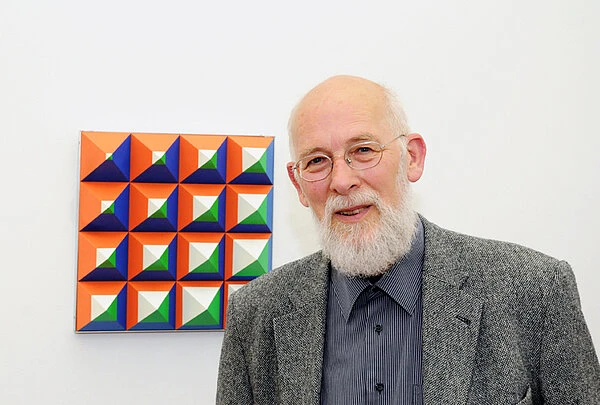
Portrait of Hans Jörg Glattfelder. Photo by Olaf Nagel
Photo by Olaf Nagel

Hans Jörg Glattfelder is one of the foremost contemporary representatives and most important innovators of European Constructive and Concrete Art. Emerging from the tradition of the Zurich Concretists, he significantly expanded its boundaries, transforming geometry from a system for constructing images into an instrument for investigating space, perception, and the very possibility of giving visual form to what cannot be directly seen. For more than six decades, his practice has developed at the intersection of art, mathematics, physics, and philosophy.

Hans Jörg Glattfelder was born in Zurich in 1939. He studied law, art history, and archaeology at the University of Zurich, but soon abandoned an academic career in favour of artistic practice and a broader engagement with social, philosophical, and scientific questions. In the early 1960s he travelled to Italy, spending time in Sicily working alongside the social reformer Danilo Dolci, followed by a period in Rome. In 1963 he settled in Florence, where his first rigorously structured works began to emerge.

Glattfelder's early practice developed in dialogue with the legacy of the Zurich school of Concrete Art, particularly the intellectual tradition associated with Max Bill, Richard Paul Lohse, Camille Graeser, and Verena Loewensberg. From the outset, however, he sought to move beyond the orthogonal grid and the conventional organisation of the pictorial plane. In Italy he also encountered Op Art, kinetic art, and the experimental artistic movements of the 1960s. His first solo exhibition was held at Galleria Numero in Milan in 1966.

During the second half of the 1960s, Glattfelder began investigating the possibility of producing artworks through anonymous industrial processes. Among the most distinctive results of this research were his programmed pyramidal reliefs, constructed from serially manufactured geometric modules. Colour was distributed across different faces of the pyramids so that the appearance of the work changed according to the viewer's position. The image thus ceased to function as a stable plane and became a system dependent on space, light, and the movement of the observer.

In 1970, Glattfelder moved to Milan, where he maintained close contacts with Antonio Calderara and Gianni Colombo. During this period, the problem of space became definitively central to his art. Whereas classical Concrete Art had largely been grounded in Euclidean geometry, right angles, numerical sequences, and the division of the plane, Glattfelder began to explore space as a more complex, unstable, and multidimensional structure.

In 1977 he initiated one of the defining bodies of work in his career: the “non-Euclidean metaphors” (Nicht-euklidische Metaphern). In these works, Glattfelder abandoned what he regarded as the “dogma of the right angle” and turned towards curved spatial systems. Converging lines, distorted quadrilaterals, chromatic sequences, and disruptions of conventional perspective evoke the curvature of space while questioning the apparent stability of the image itself.

Glattfelder was careful, however, not to reduce art to an illustration of mathematics or physics. The idea of the “metaphor” is therefore essential to his work: an artwork does not reproduce a scientific model literally, but creates a visual equivalent for an idea or phenomenon that cannot itself be directly represented. The tension between rational construction and perceptual experience became one of the defining characteristics of his mature practice.

Glattfelder developed these ideas not only as an artist but also as a theorist. Through numerous texts, interviews, and lectures, he explored the possibility of an art grounded in rational thought without being confined by rationalism. In the early 1980s he formulated the concept of “meta-rationalism” and also addressed “methodical constructivism” as a space for dialogue between artistic and scientific modes of knowledge. His aim was not to subordinate art to mathematics, but to create a situation in which the rational system itself could become an object of investigation.

Glattfelder's international recognition grew steadily from the late 1960s onward. In 1986 he participated in the Venice Biennale as part of the project Arte e Scienza – Colore. In 1987 he received the Camille Graeser Prize in Zurich. In 1990 he worked in New York on a fellowship from the City of Zurich, and in 1992 the Josef Albers Museum in Bottrop presented a retrospective of his work.

In the decades that followed, his work was presented in a number of major museum projects. In 2013 Museum Haus Konstruktiv in Zurich organised the retrospective Was der Fall ist / All That Is the Case, covering some five decades of his practice. Monographic museum presentations followed, including at the Vasarely Museum in Budapest and Museum Ritter in Waldenbuch. Museum Ritter's exhibition Vom Besonderen zum Allgemeinen / From the Particular to the General in 2019 brought together paintings, reliefs, collages, drawings, and a kinetic installation, tracing the development of his artistic language from the 1960s.

In 2016 Glattfelder received the Peter C. Ruppert Prize for Concrete Art in Europe, one of the significant awards in the field of European Concrete Art.

His works are held in museum and institutional collections devoted to Constructive and Concrete Art, among them Museum Haus Konstruktiv in Zurich, Museum Ritter / Sammlung Marli Hoppe-Ritter, the Stiftung für Konkrete Kunst und Design Ingolstadt, and the Sammlung Peter C. Ruppert at the Museum im Kulturspeicher, Würzburg.

Glattfelder has continued to pursue the problem of space in his later work. In 2025 the Arithmeum at the University of Bonn opened his retrospective Aufbruch zu neuen Dimensionen, tracing his practice from the early constructive investigations to works of recent years. Even after more than six decades, the work still turns on a fundamental question: how a two-dimensional image can produce a sense of space that extends beyond immediate visual experience.

Today Hans Jörg Glattfelder lives and works in Basel. His practice holds a particular place between the history of Zurich Concretism and contemporary ideas of space. Where the first generation of Concrete Art sought to establish an autonomous visual order through number, colour, and geometry, Glattfelder took the next step and called into question the geometry on which that order was based.

The work of Hans Jörg Glattfelder is a rare case of an art in which intellectual rigour does not remove visual experience, but makes it deeper and more complex. His works exist between a mathematical system and sensory perception, between the plane and space, between what can be calculated and what can only be seen or imagined. That is what makes Glattfelder not simply a continuator of the Concrete Art tradition, but one of the artists who substantially widened that movement's idea of space.
About the artist

Hans Jörg Glattfelder

1939, Switzerland

Hans Jörg Glattfelder is one of the foremost contemporary representatives and most important innovators of European Constructive and Concrete Art. Emerging from the tradition of the Zurich Concretists, he significantly expanded its boundaries, transforming geometry from a system for constructing images into an instrument for investigating space, perception, and the very possibility of giving visual form to what cannot be directly seen. For more than six decades, his practice has developed at the intersection of art, mathematics, physics, and philosophy.

Hans Jörg Glattfelder was born in Zurich in 1939. He studied law, art history, and archaeology at the University of Zurich, but soon abandoned an academic career in favour of artistic practice and a broader engagement with social, philosophical, and scientific questions. In the early 1960s he travelled to Italy, spending time in Sicily working alongside the social reformer Danilo Dolci, followed by a period in Rome. In 1963 he settled in Florence, where his first rigorously structured works began to emerge.

Glattfelder's early practice developed in dialogue with the legacy of the Zurich school of Concrete Art, particularly the intellectual tradition associated with Max Bill, Richard Paul Lohse, Camille Graeser, and Verena Loewensberg. From the outset, however, he sought to move beyond the orthogonal grid and the conventional organisation of the pictorial plane. In Italy he also encountered Op Art, kinetic art, and the experimental artistic movements of the 1960s. His first solo exhibition was held at Galleria Numero in Milan in 1966.

During the second half of the 1960s, Glattfelder began investigating the possibility of producing artworks through anonymous industrial processes. Among the most distinctive results of this research were his programmed pyramidal reliefs, constructed from serially manufactured geometric modules. Colour was distributed across different faces of the pyramids so that the appearance of the work changed according to the viewer's position. The image thus ceased to function as a stable plane and became a system dependent on space, light, and the movement of the observer.

In 1970, Glattfelder moved to Milan, where he maintained close contacts with Antonio Calderara and Gianni Colombo. During this period, the problem of space became definitively central to his art. Whereas classical Concrete Art had largely been grounded in Euclidean geometry, right angles, numerical sequences, and the division of the plane, Glattfelder began to explore space as a more complex, unstable, and multidimensional structure.

In 1977 he initiated one of the defining bodies of work in his career: the “non-Euclidean metaphors” (Nicht-euklidische Metaphern). In these works, Glattfelder abandoned what he regarded as the “dogma of the right angle” and turned towards curved spatial systems. Converging lines, distorted quadrilaterals, chromatic sequences, and disruptions of conventional perspective evoke the curvature of space while questioning the apparent stability of the image itself.

Glattfelder was careful, however, not to reduce art to an illustration of mathematics or physics. The idea of the “metaphor” is therefore essential to his work: an artwork does not reproduce a scientific model literally, but creates a visual equivalent for an idea or phenomenon that cannot itself be directly represented. The tension between rational construction and perceptual experience became one of the defining characteristics of his mature practice.

Glattfelder developed these ideas not only as an artist but also as a theorist. Through numerous texts, interviews, and lectures, he explored the possibility of an art grounded in rational thought without being confined by rationalism. In the early 1980s he formulated the concept of “meta-rationalism” and also addressed “methodical constructivism” as a space for dialogue between artistic and scientific modes of knowledge. His aim was not to subordinate art to mathematics, but to create a situation in which the rational system itself could become an object of investigation.

Glattfelder's international recognition grew steadily from the late 1960s onward. In 1986 he participated in the Venice Biennale as part of the project Arte e Scienza – Colore. In 1987 he received the Camille Graeser Prize in Zurich. In 1990 he worked in New York on a fellowship from the City of Zurich, and in 1992 the Josef Albers Museum in Bottrop presented a retrospective of his work.

In the decades that followed, his work was presented in a number of major museum projects. In 2013 Museum Haus Konstruktiv in Zurich organised the retrospective Was der Fall ist / All That Is the Case, covering some five decades of his practice. Monographic museum presentations followed, including at the Vasarely Museum in Budapest and Museum Ritter in Waldenbuch. Museum Ritter's exhibition Vom Besonderen zum Allgemeinen / From the Particular to the General in 2019 brought together paintings, reliefs, collages, drawings, and a kinetic installation, tracing the development of his artistic language from the 1960s.

In 2016 Glattfelder received the Peter C. Ruppert Prize for Concrete Art in Europe, one of the significant awards in the field of European Concrete Art.

His works are held in museum and institutional collections devoted to Constructive and Concrete Art, among them Museum Haus Konstruktiv in Zurich, Museum Ritter / Sammlung Marli Hoppe-Ritter, the Stiftung für Konkrete Kunst und Design Ingolstadt, and the Sammlung Peter C. Ruppert at the Museum im Kulturspeicher, Würzburg.

Glattfelder has continued to pursue the problem of space in his later work. In 2025 the Arithmeum at the University of Bonn opened his retrospective Aufbruch zu neuen Dimensionen, tracing his practice from the early constructive investigations to works of recent years. Even after more than six decades, the work still turns on a fundamental question: how a two-dimensional image can produce a sense of space that extends beyond immediate visual experience.

Today Hans Jörg Glattfelder lives and works in Basel. His practice holds a particular place between the history of Zurich Concretism and contemporary ideas of space. Where the first generation of Concrete Art sought to establish an autonomous visual order through number, colour, and geometry, Glattfelder took the next step and called into question the geometry on which that order was based.

The work of Hans Jörg Glattfelder is a rare case of an art in which intellectual rigour does not remove visual experience, but makes it deeper and more complex. His works exist between a mathematical system and sensory perception, between the plane and space, between what can be calculated and what can only be seen or imagined. That is what makes Glattfelder not simply a continuator of the Concrete Art tradition, but one of the artists who substantially widened that movement's idea of space.

Selected Artworks

2
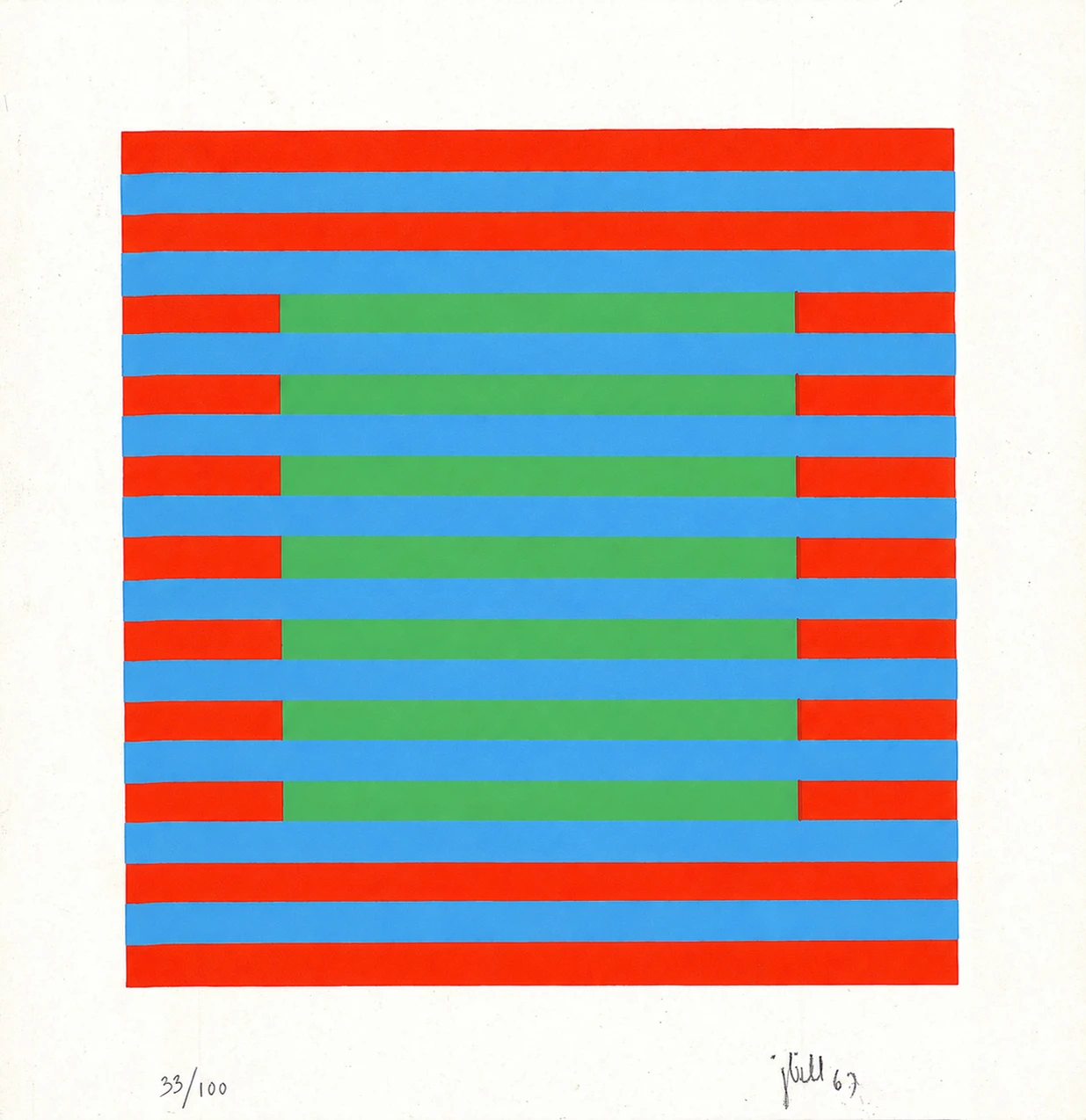
Untitled, color silkscreen on paper, 1967
Hans Jörg Glattfelder

Untitled

1967

25 × 25 cm

Color silkscreen on paper

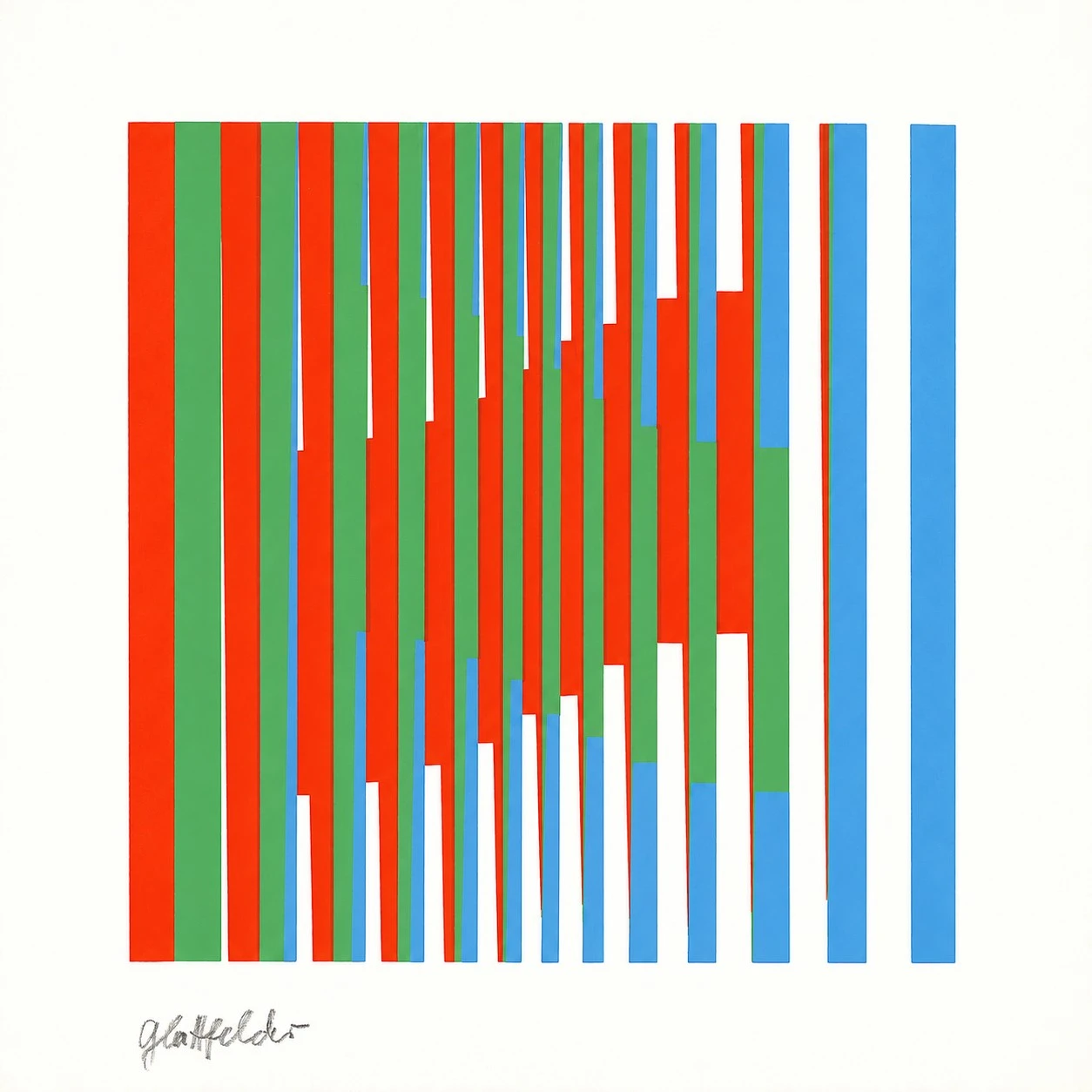
Untitled, color silkscreen on paper, 1967
Hans Jörg Glattfelder

Untitled

1967

25 × 25 cm

Color silkscreen on paper

Join our mailing list for updates about our artists, exhibitions, events, and more.

  • Artists
  • Art Fairs
  • Collecting
  • About
  • Contacts
  • Newsletter
  • Privacy Policy
  • Terms of Use

© VERA 2026